


Wren’s futuristic Vessel proves the Diver One was only the beginning
Tom AustinI’m beginning to think Craig Karger might have played us all a little bit. When Wren appeared in 2024 with the Diver One, it looked like we were dealing with another enthusiast-led independent with a particular fondness for dive watches. Then came the Diver 38, followed by more variations in steel and titanium, each building on the same formula of strong specs, sensible proportions and enough interesting detail to keep us watch nerds occupied.
Turns out, they may have been the Trojan horse. Wren had our attention, and now Wren’s founder, Craig, has decided it’s time to get weird. The Vessel is the brand’s first watch that isn’t a diver, designed alongside Max Resnick over two years, and it takes Wren in such a wildly different direction that seeing the two watches side-by-side is almost funny. More importantly, it feels like the first time we’re seeing just how far Craig actually wants to take this brand he’s created.
The case
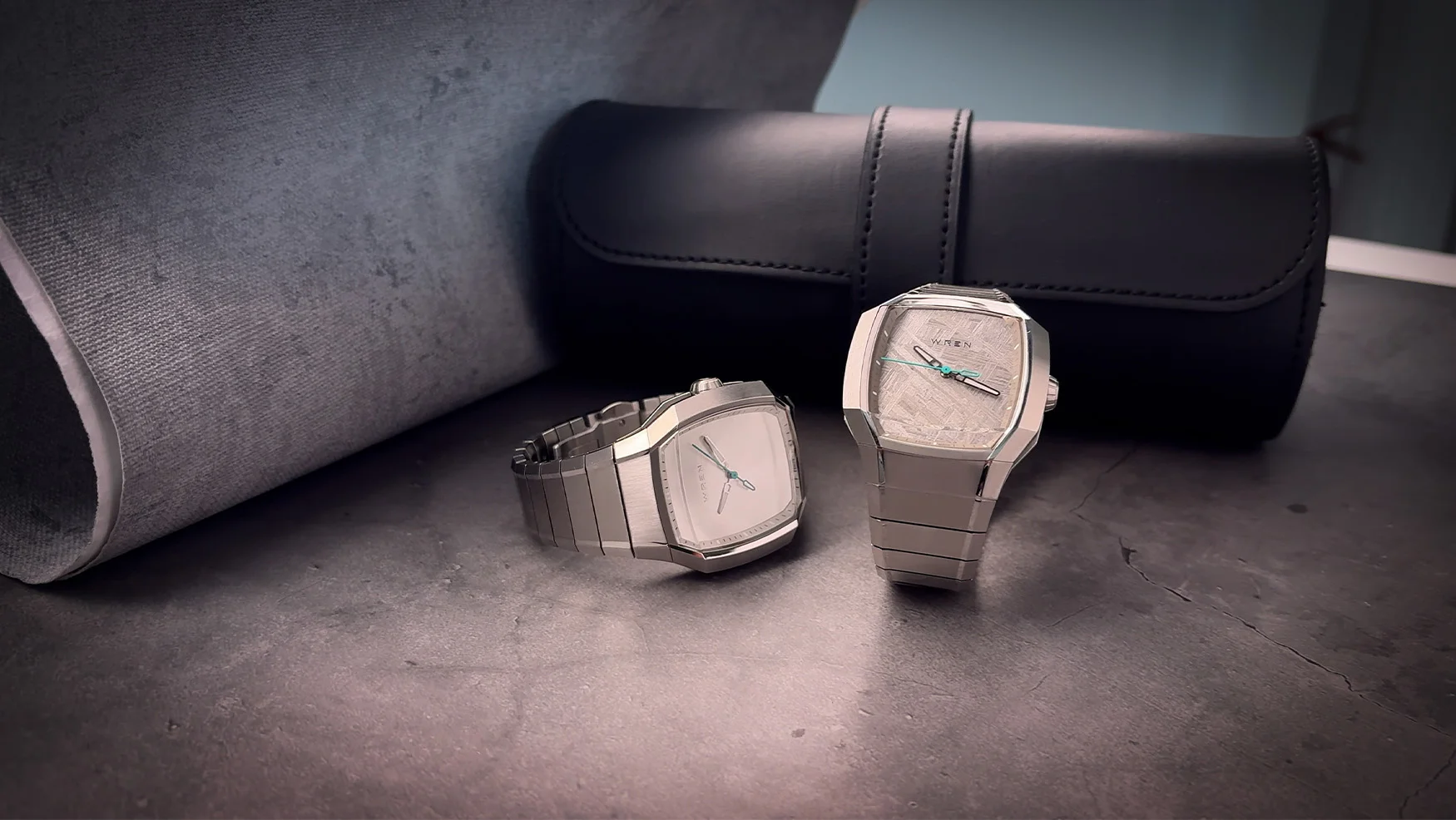
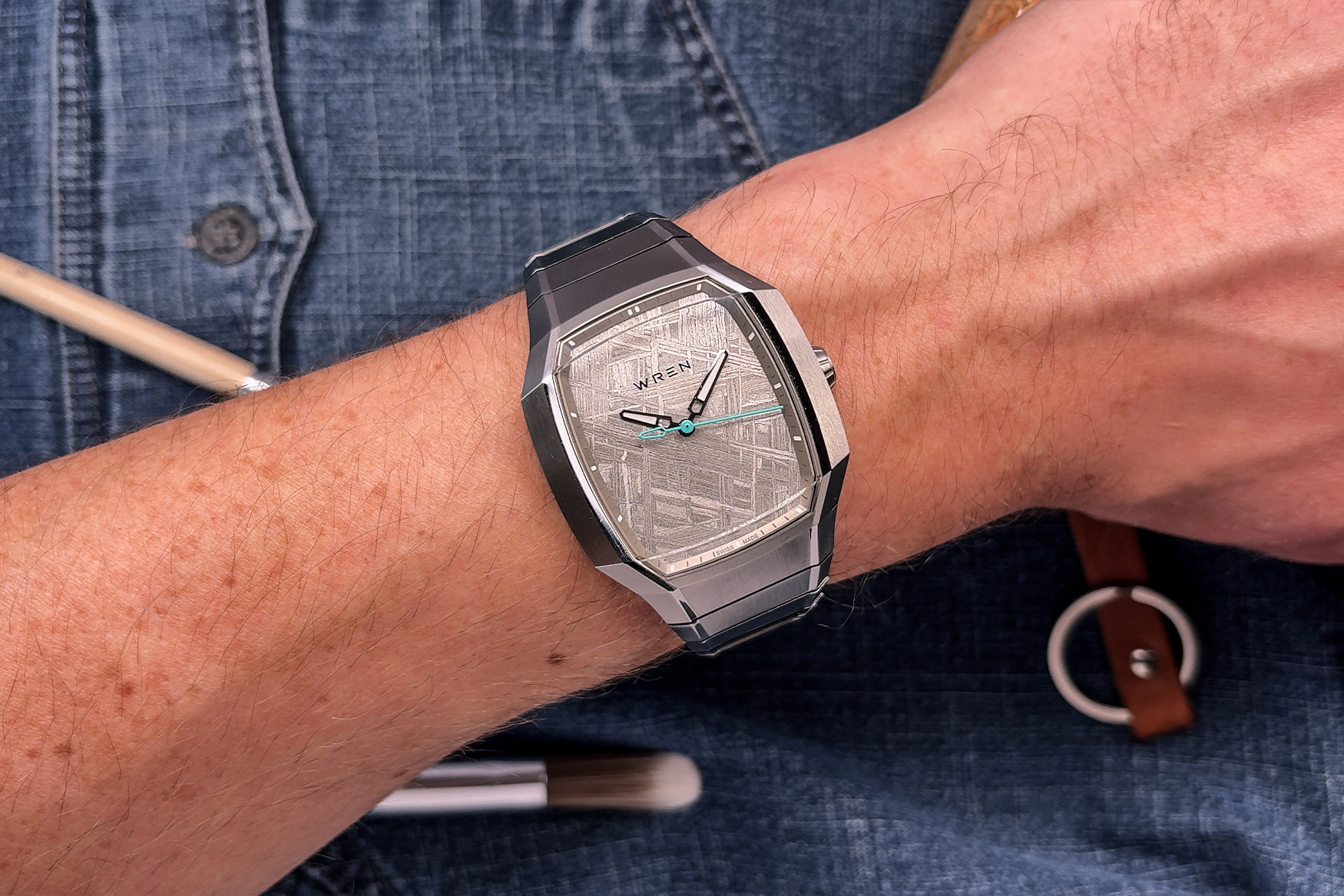
Craig’s brief for the Vessel was fairly simple in wording and much less simple in practice: make an integrated-bracelet sports watch from 2075, not 1975. A sensible request when most of the category still owes at least some debt to a handful of watches designed half a century ago. Designer Max Resnick, known for his work with brands including Anoma and VPC, was brought in to turn that idea into something physical. The result is a 39mm by 39mm cushion-shaped case made from 904L stainless steel, measuring 10.6mm thick. Those numbers make it sound relatively restrained. Put it on a table, and it looks like somebody has parked a small spacecraft next to your coffee.
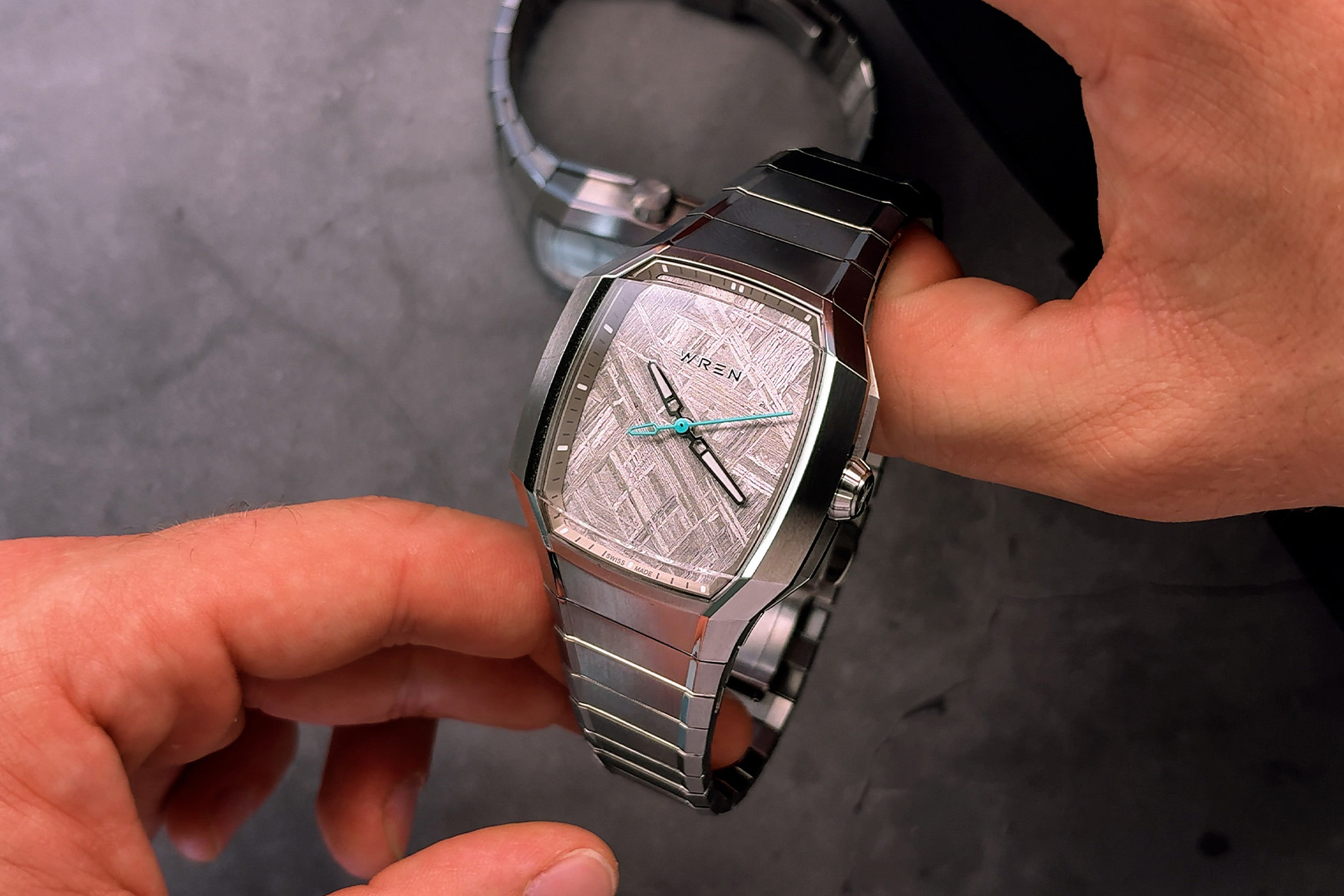
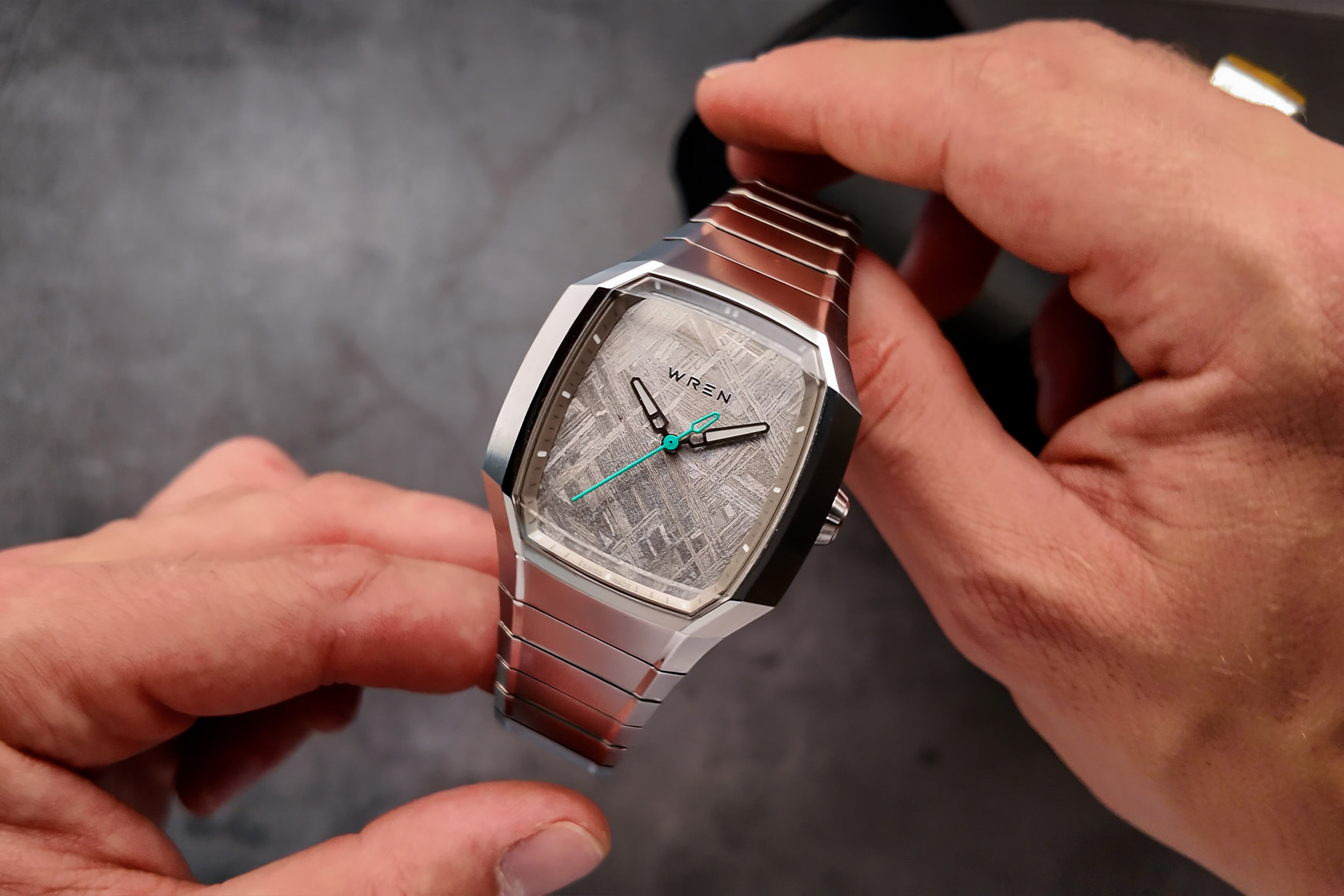
Most of that effect comes from the sapphire crystal. It’s one piece, despite initially looking as if a conventional flat crystal has been dropped into a faceted sapphire surround. The top features a series of curved facets, and the underside has been machined with corresponding curved facets in negative, matching the geometry above. It keeps the dial far clearer when viewed through the edges and gives the whole crystal a strange, architectural depth. It was also, by Craig’s own admission, an absolute nightmare to make.
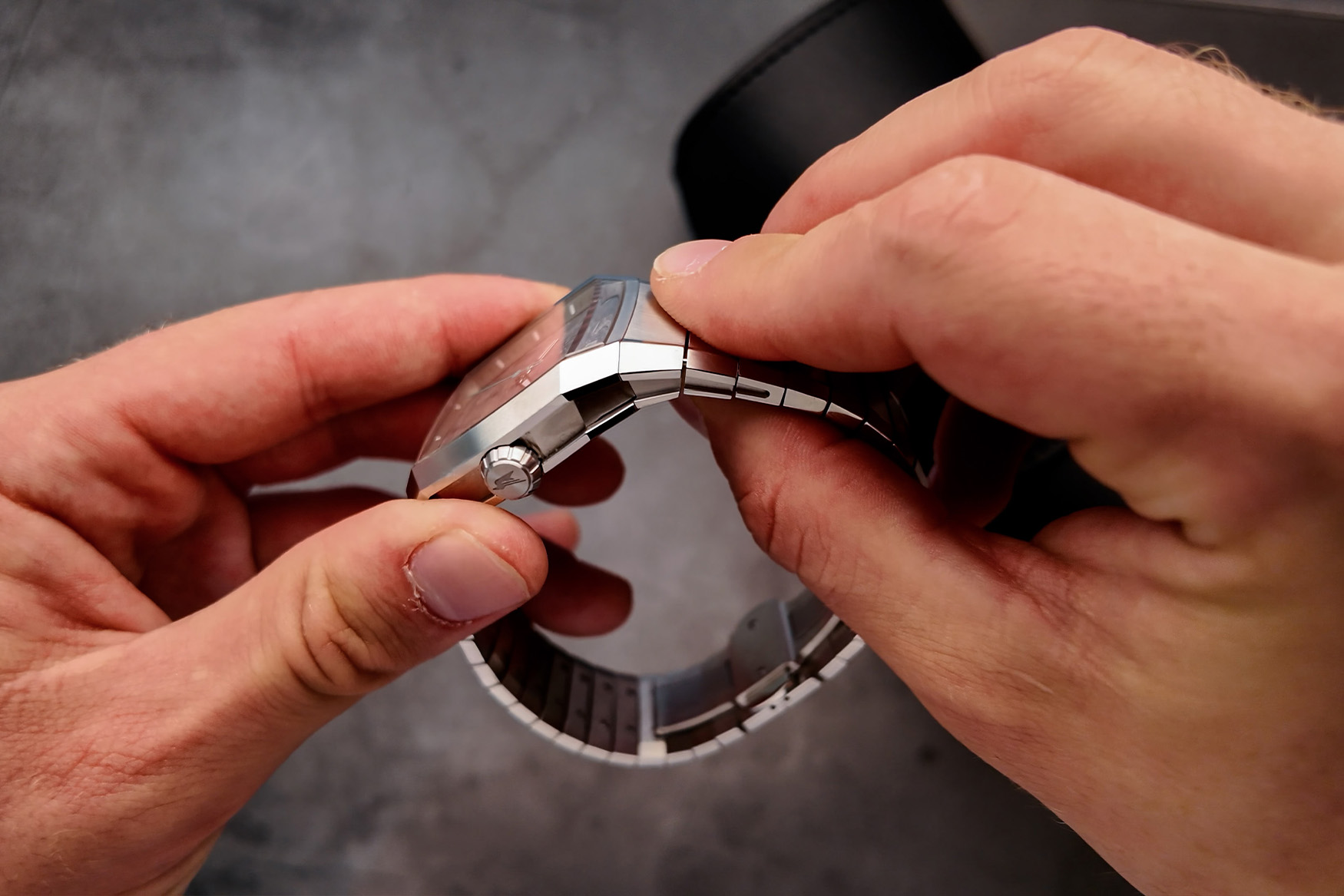
One early production attempt produced five acceptable crystals from a batch of 100. Manufacturers started saying no when Wren asked for the curved geometry on the underside to perfectly mirror the top. Eventually, a specialist experienced in producing full sapphire cases agreed to have a crack at it. Craig reckons the crystal alone pushed the project back by about eight months to a year. I have to say, I admire this kind of engineering stubbornness immensely. The case underneath is made of three pieces, allowing Wren to experiment with different materials across future Vessel releases. The whole thing curves gently across the wrist; the 39mm square dimensions sit almost suspiciously well considering how dramatic, and relatively large, the watch looks off-wrist.
The dials
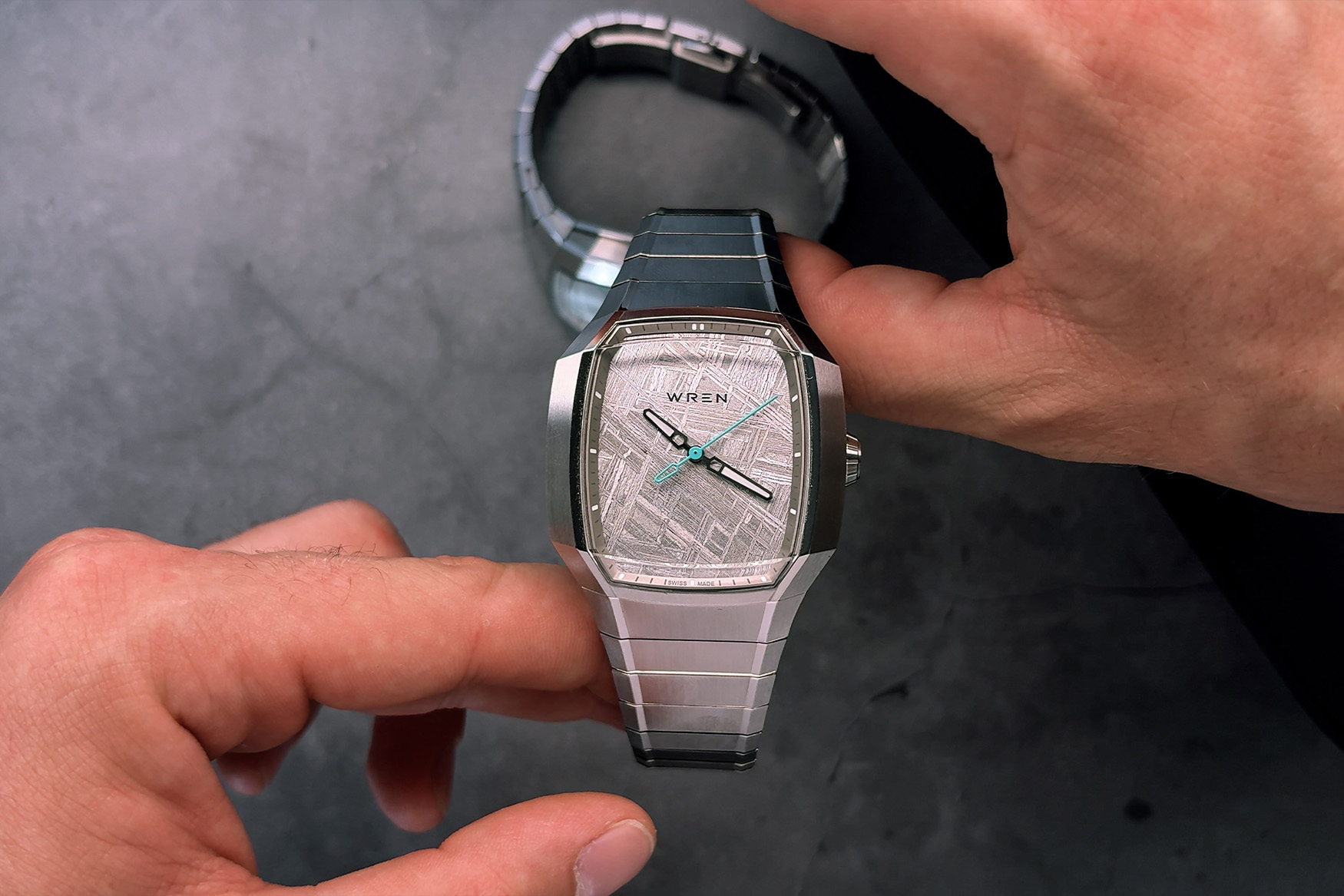
Wren is launching the Vessel with two dial choices, with 150 examples of each being produced. The first uses a steel sunray dial, which is super clean, devoid of any clutter or excessive dial text. The second gets a light grey meteorite; yes, it’s fussier than its stablemate, yet it’s certainly a cohesive material choice given the watch’s overall design. Both use an aqua-coloured seconds hand, with the same colour appearing again on the rotor visible through the exhibition caseback.
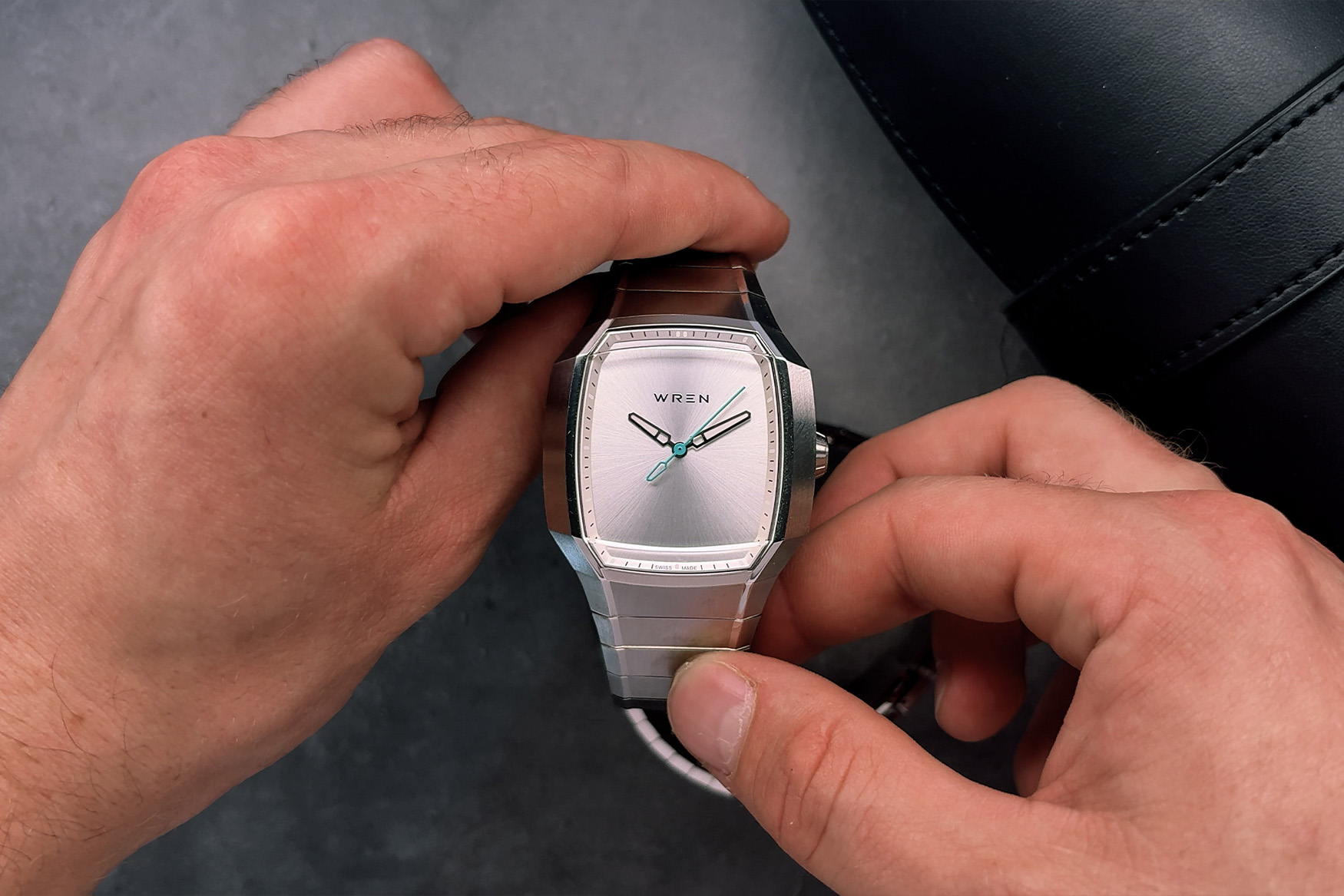
That aqua detail matters more than simply adding a splash of colour to the dial. It comes directly from Wren’s original Diver One Aqua, creating a small family connection between the watch that launched the brand and the one that is now busy tearing up the rulebook. Personally, I think the steel dial might be the sleeper of the pair. Meteorite inevitably has more visual drama, and every dial has its own pattern, but there’s already so much happening with that case and crystal that the cleaner steel surface gives it room to do its thing.
The movement
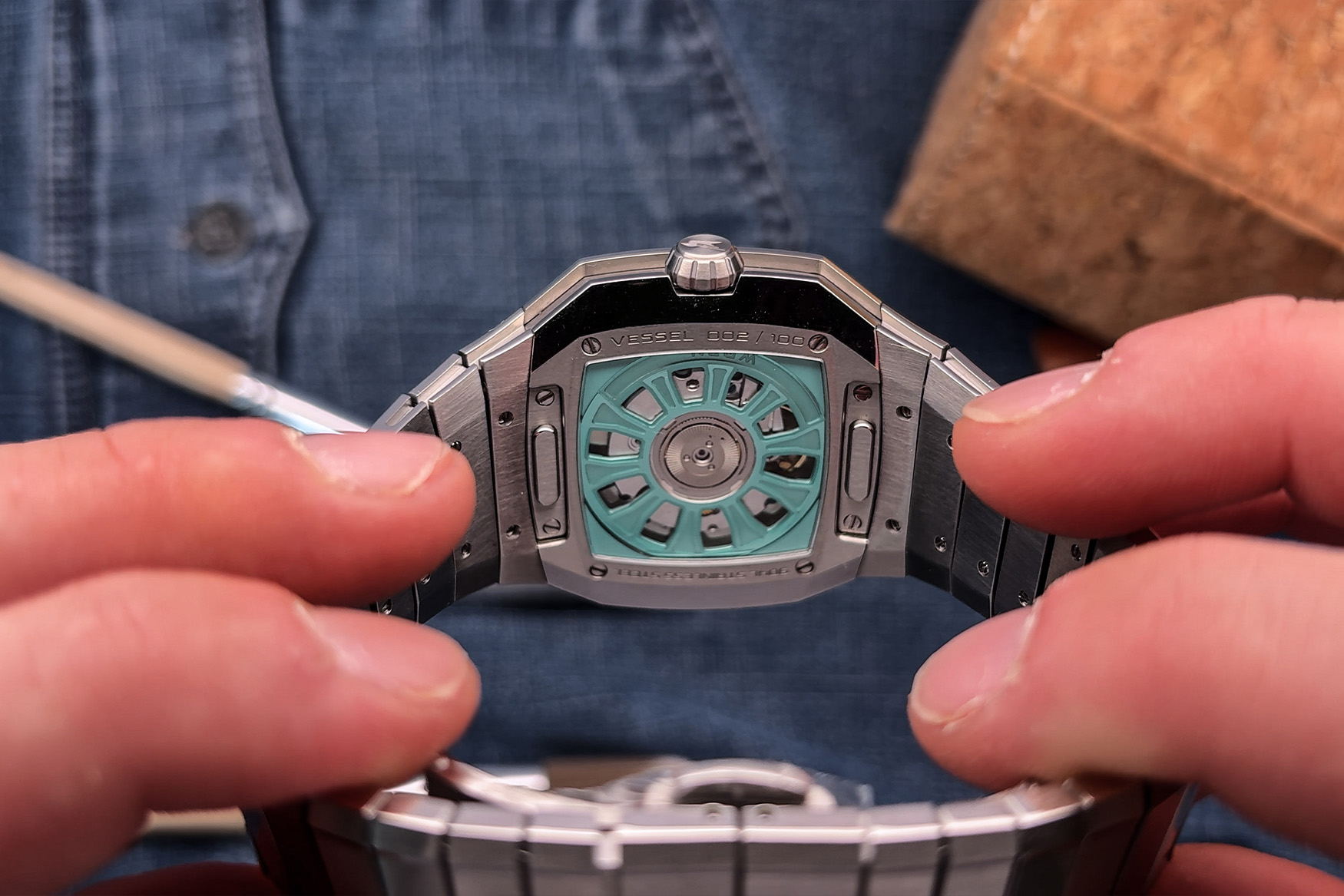
Underneath all of the mad sapphire geometry is something reassuringly straightforward: an automatic Sellita SW300-1. It beats at 4Hz, offers 56 hours of power reserve and is visible through the exhibition caseback, complete with that bright aqua rotor. Craig has been keen to point out that he didn’t want the Vessel to become a design object that happened to tell the time. Wren’s audience has been built around enthusiasts, and the nerdy stuff still matters, and that thinking runs throughout the watch. The movement is slim and easy to service, the case offers enough water resistance for everyday use, and Wren has spent a frankly unreasonable amount of effort engineering components so that they’re right, rather than resorting to compromises.
The bracelet
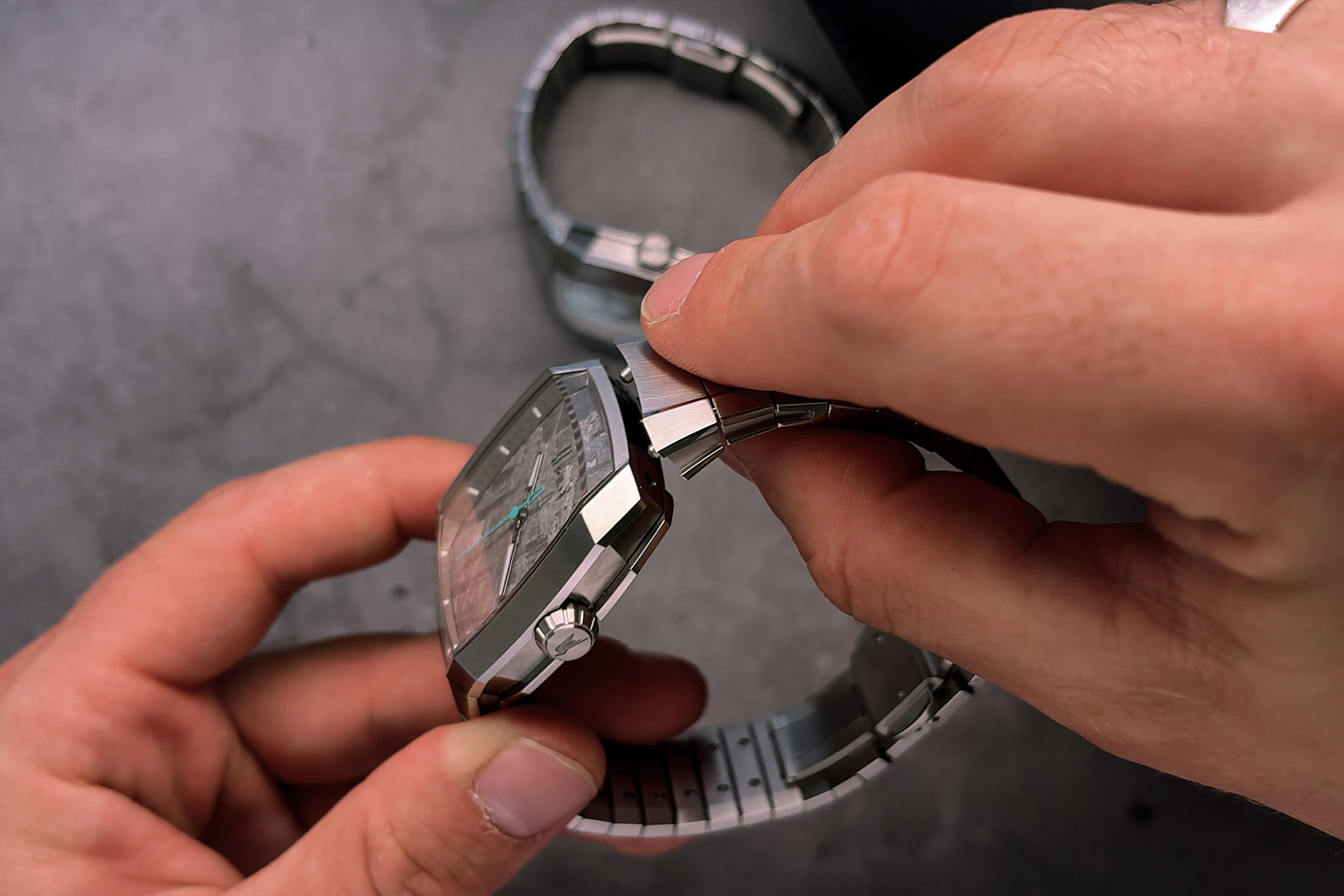
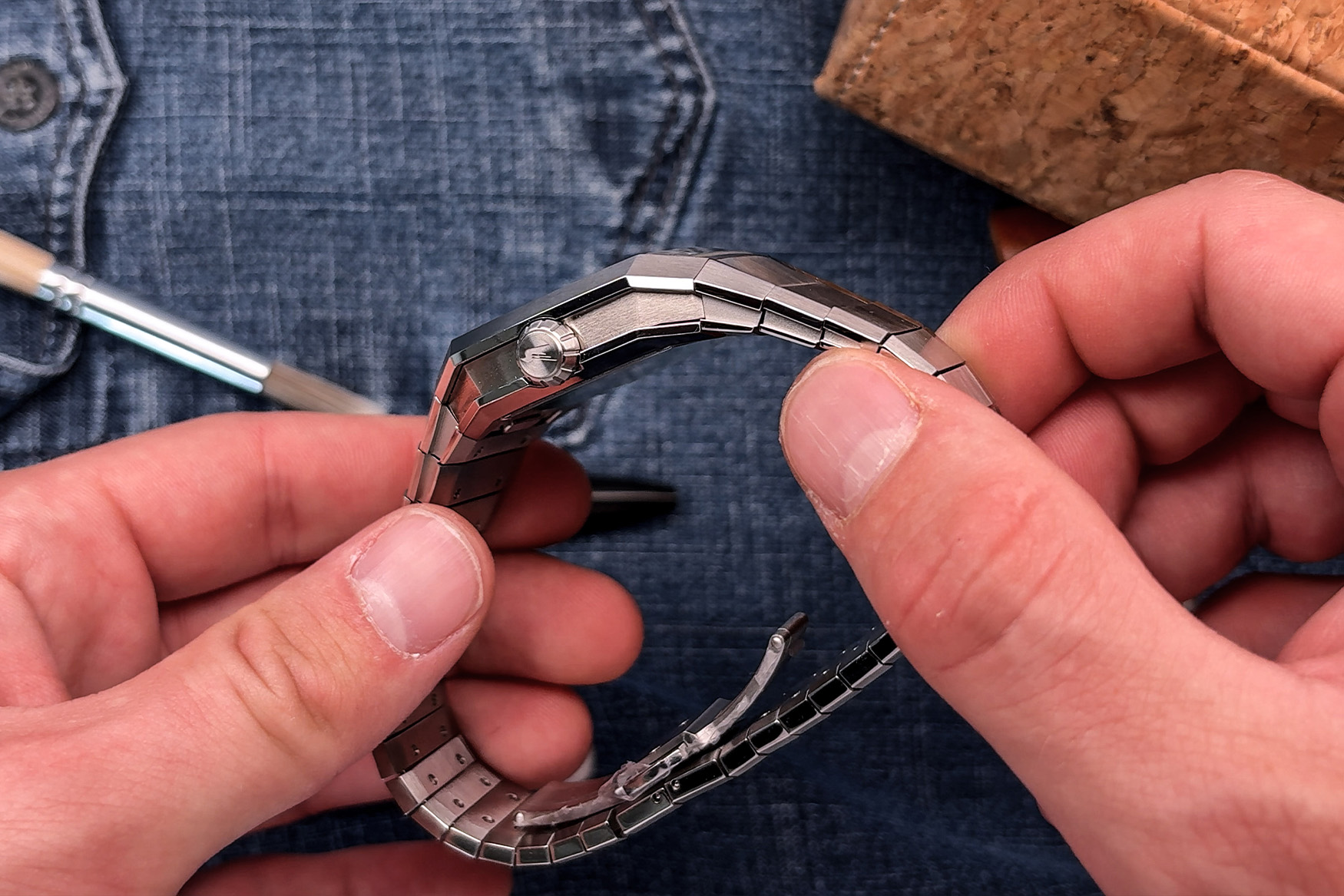
That brings us neatly to the bracelet, because Wren has been tinkering here too. It’s made from 904L stainless steel and features a proprietary quick-release mechanism, plus a micro-adjustment system built directly into the links. There isn’t a giant clasp hiding beneath your wrist to accommodate the adjustment, and the system required Wren to develop its own components and tooling, all of which work to extremely tight tolerances.
The more interesting bit is how it wears. The first few links fall away from the case quickly and follow the curve of your wrist, helped by the case’s cambered shape. Craig says some have compared it to wearing a bangle; I can see exactly what he means. It’s almost like the case shape takes the term integrated bracelet to a whole new level. On top of all that, there’s an optional rubber strap which changes up the look, available for an extra US$195/£175.
The verdict
I think the Vessel tells us far more about Wren than another Diver One ever could. The dive watches established the basics. They proved Craig understands what enthusiasts care about, gave Wren a recognisable identity, and built an audience surprisingly quickly for a brand founded in 2024. The Vessel gives him somewhere to go with all of that. The familiar Wren fingerprints are still there. Good proportions, dependable mechanics, thoughtful adjustability and a slightly obsessive attitude towards engineering are all on show.
Craig has simply removed the dive-watch framework surrounding them and let the design wander somewhere considerably stranger. That makes the Vessel feel important beyond the watch itself. Wren can now be the brand that makes the Diver One and something that looks like it was smuggled back from 2075. That’s a much more interesting place to be. Perhaps the Diver One really was the Trojan horse after all, and now Craig’s through the gates, and it looks like he intends to have some fun.
Wren Vessel pricing and availability
The Wren Vessel is limited to 150 pieces in each dial variation, and they’re available to pre-order now at the Time+Tide Shop and the Time+Tide Watch Discovery Studios in London and New York City. Price: US$2,900/£2,650 (steel dial) / US$3,400/£3,095 (meteorite dial)
| Brand | Wren |
| Model | Vessel |
| Case Dimensions | 39mm x 39mm (D) x 10.6mm (T) |
| Case Material | 904L stainless steel |
| Water Resistance | 70 metres, push-pull crown |
| Crystal(s) | Faceted front sapphire crystal, exhibition case back |
| Dial | Steel sunray Meteorite |
| Lug Width | 26mm |
| Strap | 904L stainless steel integrated bracelet, butterfly clasp, micro-adjustment, optional rubber strap |
| Movement | Sellita SW300-1, automatic |
| Power Reserve | 56 hours |
| Functions | Hours, minutes, seconds |
| Availability | Limited to 150 pieces per dial variation |
| Price | US$2,900/£2,650 (Steel sunray) US$3,400/£3,095 (Meteorite) |