


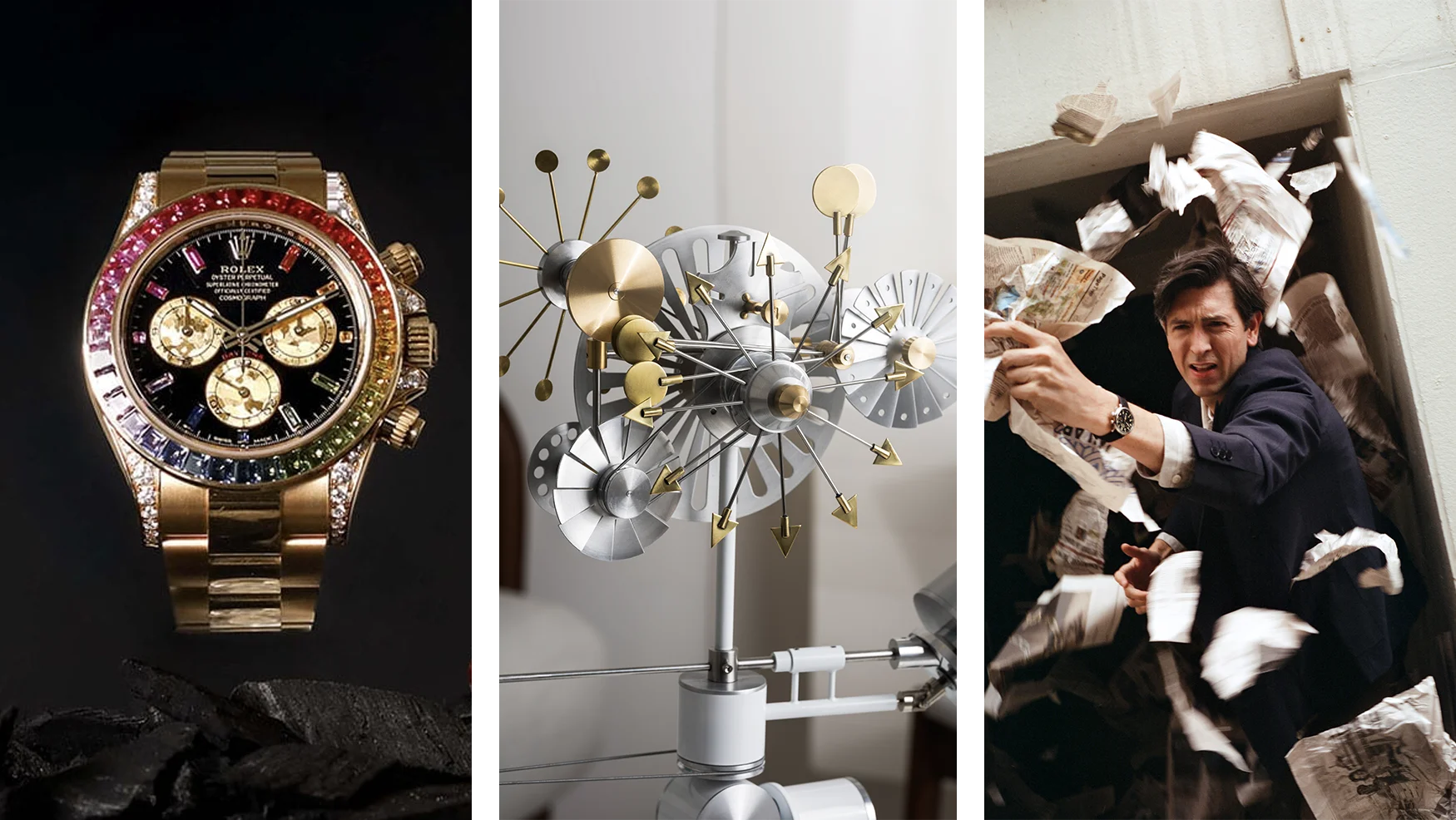
Cousin Greg teams up with Shinola, a rare Rolex Rainbow Daytona hits AU auction, MB&F continues its MADness
Tom AustinAs Centre Court packed away another fortnight of strawberries, sunshine and relentless television close-ups of celebrity watch spotting, Jannik Sinner finally lifted the Wimbledon gentlemen’s singles trophy to cap off a superb tournament. Elsewhere, it wasn’t quite such a triumphant week for English football fans, whose World Cup dreams came to an abrupt halt this week. If you’re looking for consolation, at least there’s always another tournament to spot some watches at. Or, of course, another watch release. Although judging by the odds of securing OMEGA × Swatch’s latest MoonSwatch, getting one might prove almost as difficult as England’s route to the World Cup final.
 That leaves us with plenty to unpack this week. MB&F’s M.A.D.Gallery continues its 15th-anniversary celebrations with a mesmerising kinetic watch winder by British artist Martin Smith that blurs the line between sculpture and horological accessory. Shinola has launched its first-ever brand campaign, directed by and starring a rather familiar face, while an auction house in Australia has kicked off the first auction of a very special Daytona. Finally, I’m tackling a term that’s become as divisive as it is overused: is it finally time for the watch industry to rethink the word “microbrand”?
MB&F’s M.A.D.Gallery blurs the line between art and horology

MB&F’s M.A.D.Gallery has never been about simply displaying watches. Since opening its doors in Geneva in 2011, it has championed the wonderfully eccentric intersection of horology, engineering and kinetic art, giving mechanical creators a platform that sits comfortably outside the traditional gallery world. To celebrate its 15th anniversary, the gallery has been inviting some of its longest-standing collaborators back for special limited editions, with the latest coming from British artist Martin Smith.
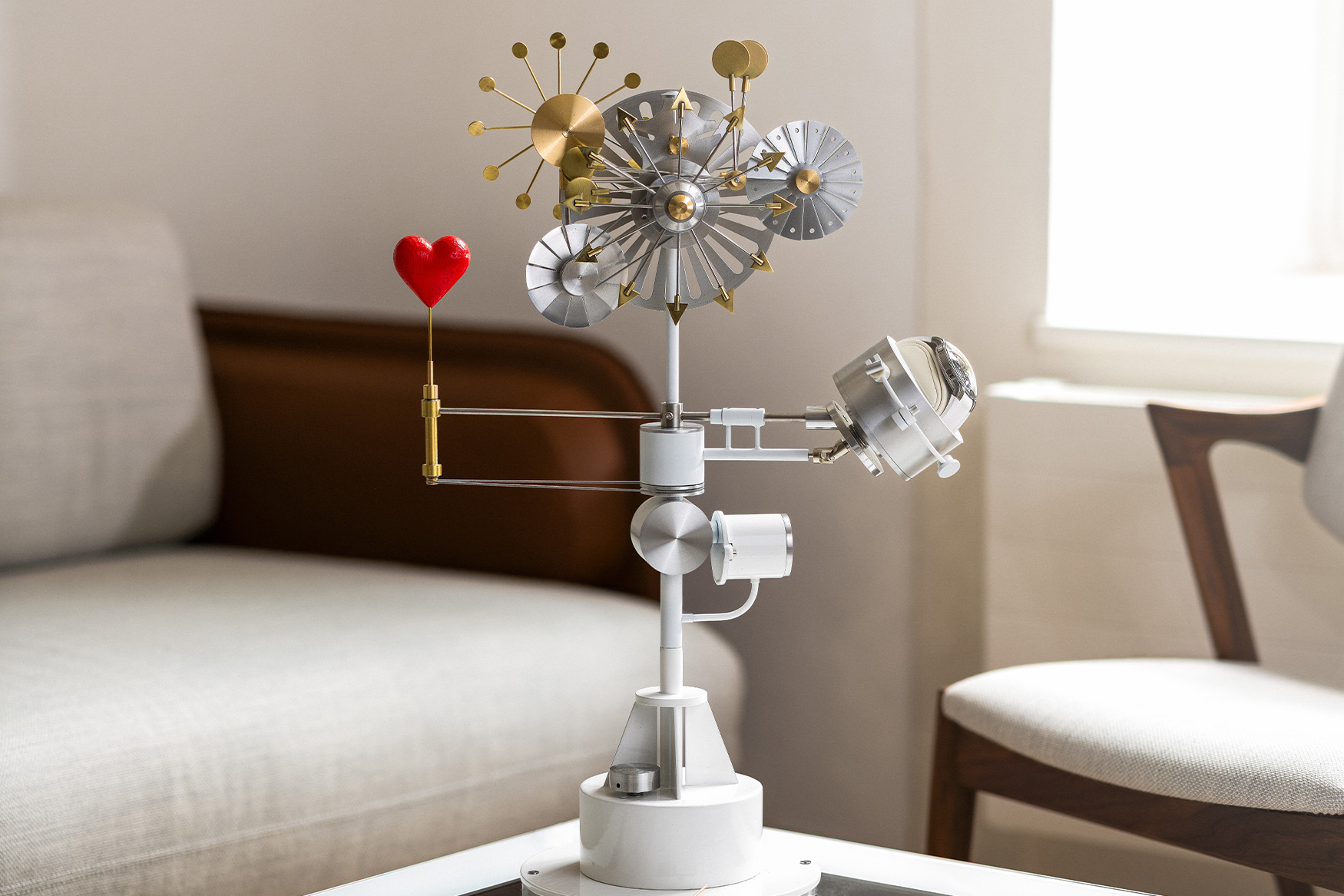
Created in Smith’s West Yorkshire studio, the Solar Orbiter is equal parts sculpture and watch winder. Standing 60cm tall and built from more than 300 handcrafted components, the mesmerising creation quietly rotates a watch while incorporating playful references to Smith’s earlier M.A.D.Gallery works, including interchangeable hearts, hands and stars. Just 10 numbered examples will be produced, each supplied in a bespoke wooden crate complete with a signed screen-printed certificate. It’s a refreshing reminder that not every horological talking point needs to be a new watch. Sometimes the stories worth telling sit just outside the industry, borrowing the same obsession with mechanics, craftsmanship and imagination that drew many of us to watches in the first place.
Nicholas Braun helps Shinola tell a new story
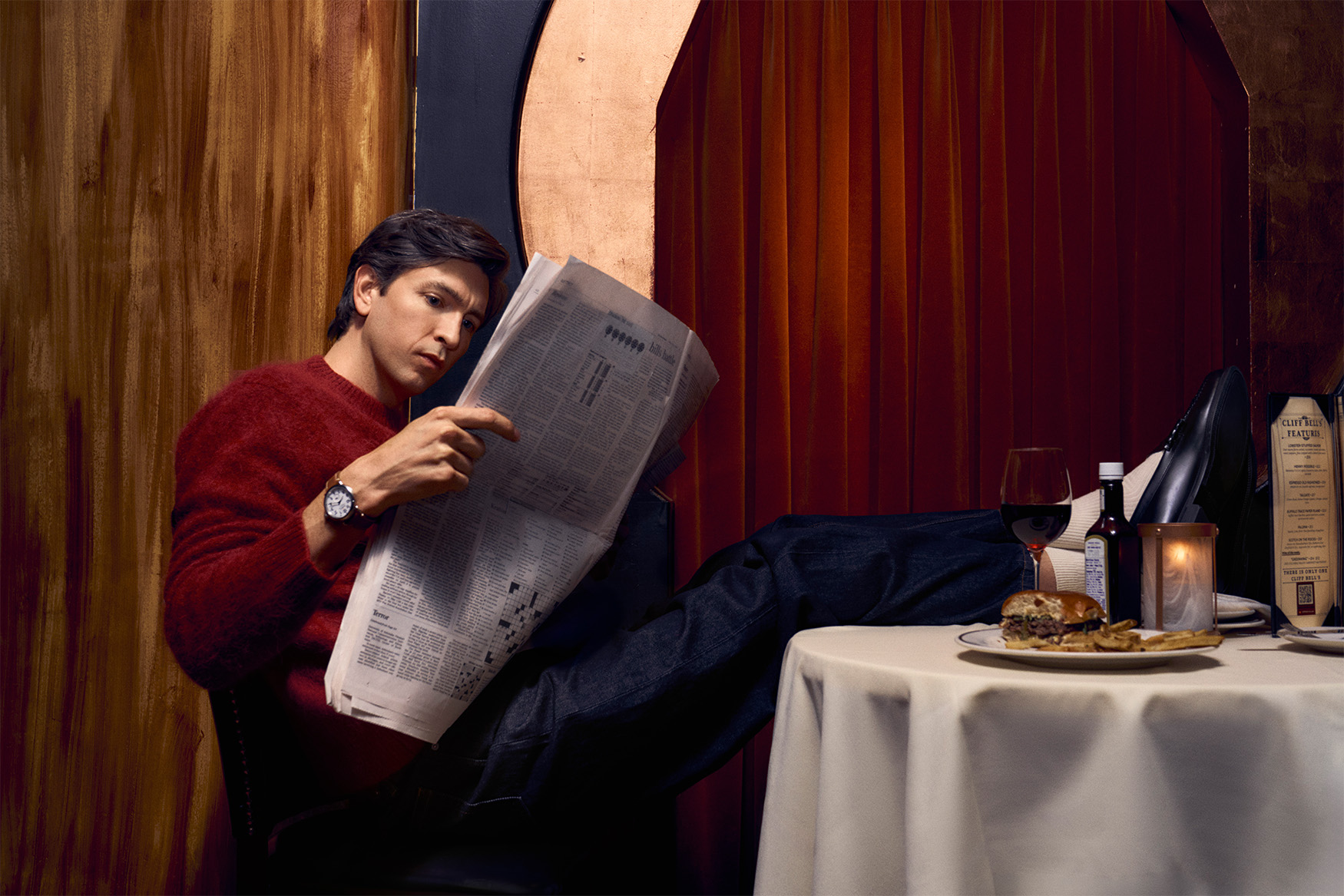
American brand Shinola has spent the past decade telling stories about Detroit, craftsmanship, and its flagship Runwell watch, but, surprisingly, it has never launched a dedicated brand campaign. That changes with Set the Pace, the company’s first-ever campaign, fronted by Succession star Nicholas Braun, who also steps behind the camera as director. Rather than channelling Greg Hirsch’s trademark awkwardness, Braun delivers something altogether more cinematic in The Restaurant, a short film where the relentless ticking of his Runwell transforms an otherwise ordinary dinner into a race against time.

Rather than focusing on specifications or heritage, Set the Pace explores our increasingly complicated relationship with time itself. For a company that has largely relied on the strength of its products and Detroit identity, it’s an interesting shift. The Runwell remains the watch that put Shinola on the map back in 2013, but this feels less like a celebration of a single model and more like an attempt to define what the brand stands for in 2026. Whether it succeeds or not, it’s an interesting move. Launching your first-ever brand campaign more than a decade after your flagship watch debuted certainly isn’t the conventional route, but then again, memorable campaigns rarely come from playing it safe.
The first new-reference Rolex Daytona Rainbow goes under the hammer
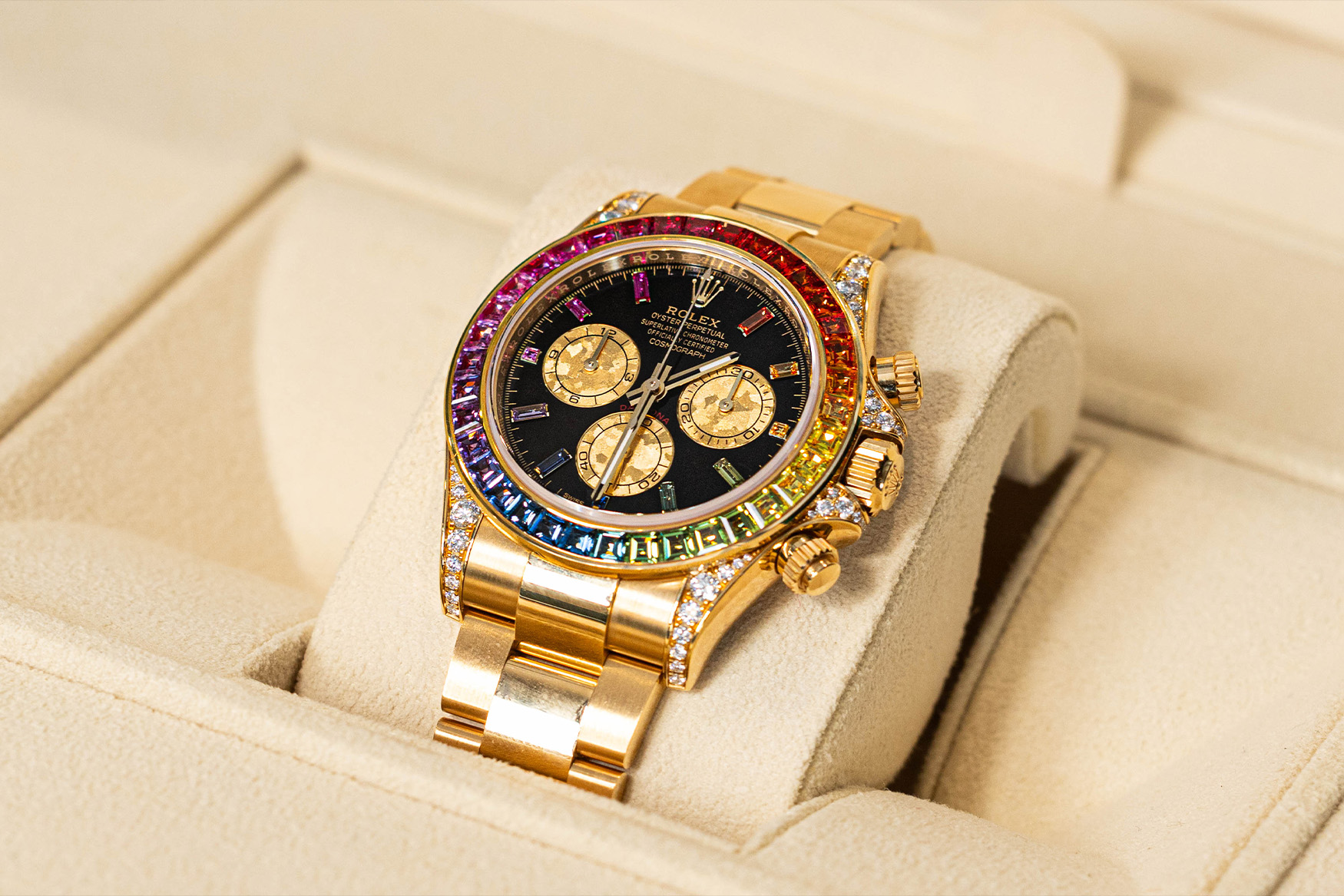
Rainbow Daytonas are no strangers to the auction block, but this one is different. First State Auctions in Australia claims it has become the first auction house anywhere in the world to offer Rolex’s latest off-catalogue Cosmograph Daytona Rainbow, reference 126598RBOW, making it Lot #1 alongside several other special pieces, in what is already shaping up to be one of the country’s most significant watch auctions of the year. While previous-generation Rainbow references have regularly appeared at auction over the years, it is said that this is the first time the new 126 reference has done so. Introduced in 2024, the yellow gold Daytona retains the signature rainbow sapphire bezel and gem-set dial that made its predecessor so desirable, but its off-catalogue status means it remains reserved for Rolex’s most valued clients.
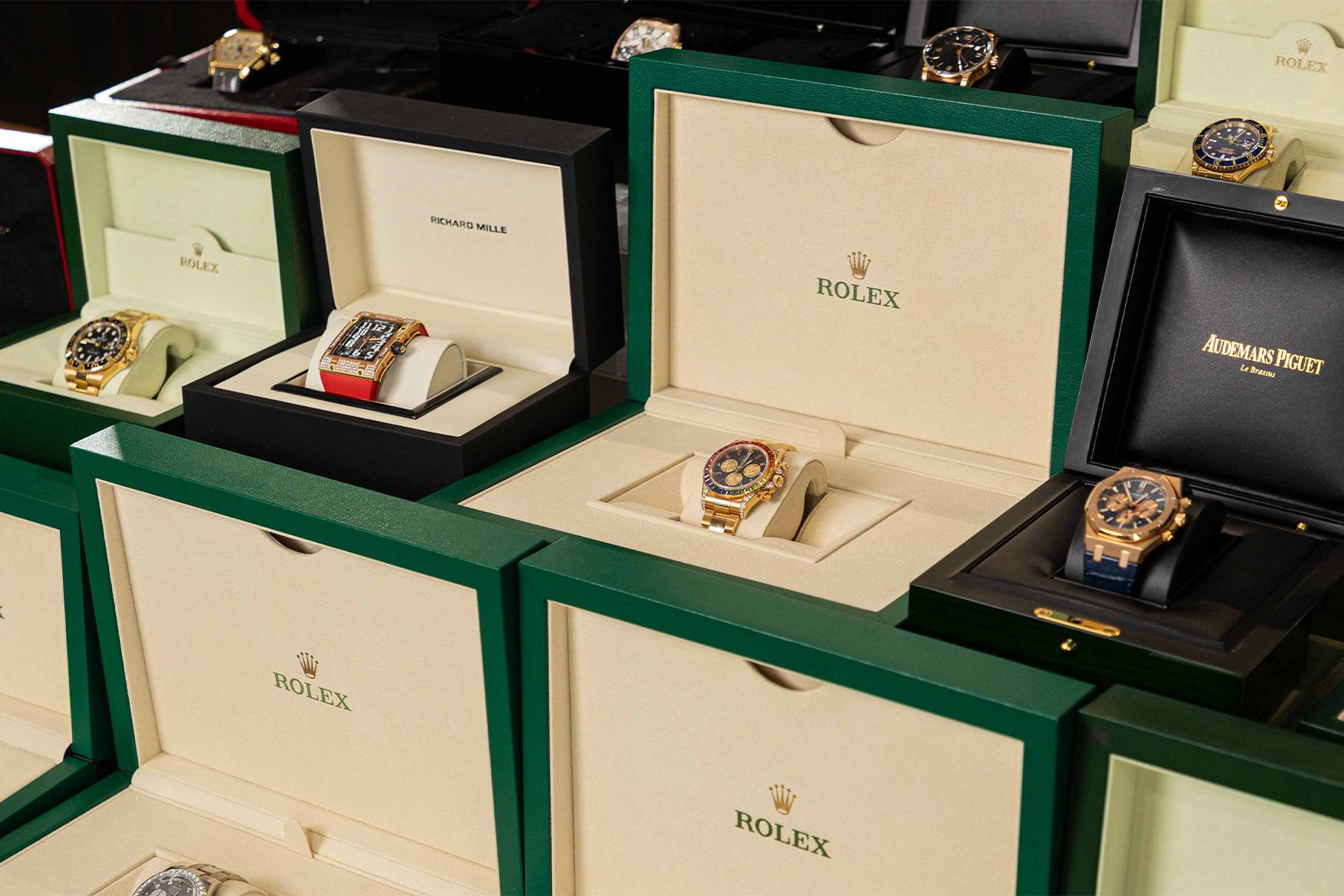
With a retail price of US$324,700 and availability measured more by relationships than waiting lists, the secondary market was always going to have its say. At the time of writing, bidding has already reached A$395,000, with just a few days still remaining before the hammer falls on Sunday. Whether it ultimately exceeds its estimate of more than A$500,000 remains to be seen, but the result will almost certainly provide the first real indication of how collectors value Rolex’s latest Rainbow Daytona in the open market. That’s a sale plenty of collectors will be watching with interest.
Hope you all have a wonderful weekend!
Tom & the Time+Tide Team
Tom’s Time+Tide take of the week: Should we stop calling them microbrands?

This week’s Time+Tide Take wasn’t actually supposed to be a Time+Tide Take. It grew out of a conversation I had with a watch brand this week that, quite innocently, led me to describe them as a microbrand. They weren’t particularly fond of the label, preferring to position themselves as something beyond it. It made me stop and think: when did “microbrand” become something brands wanted to distance themselves from? Not that long ago, the term felt like a badge of honour. It represented small teams taking creative risks without the baggage of decades of heritage or sprawling corporate structures. Brands such as Studio Underd0g, Baltic, and Christopher Ward have all, at one stage or another, embraced the idea of being small, independent and community-driven. While certainly growing beyond it, none of those companies became successful despite being called microbrands. If anything, they built loyal followings because collectors actively sought out exactly that.
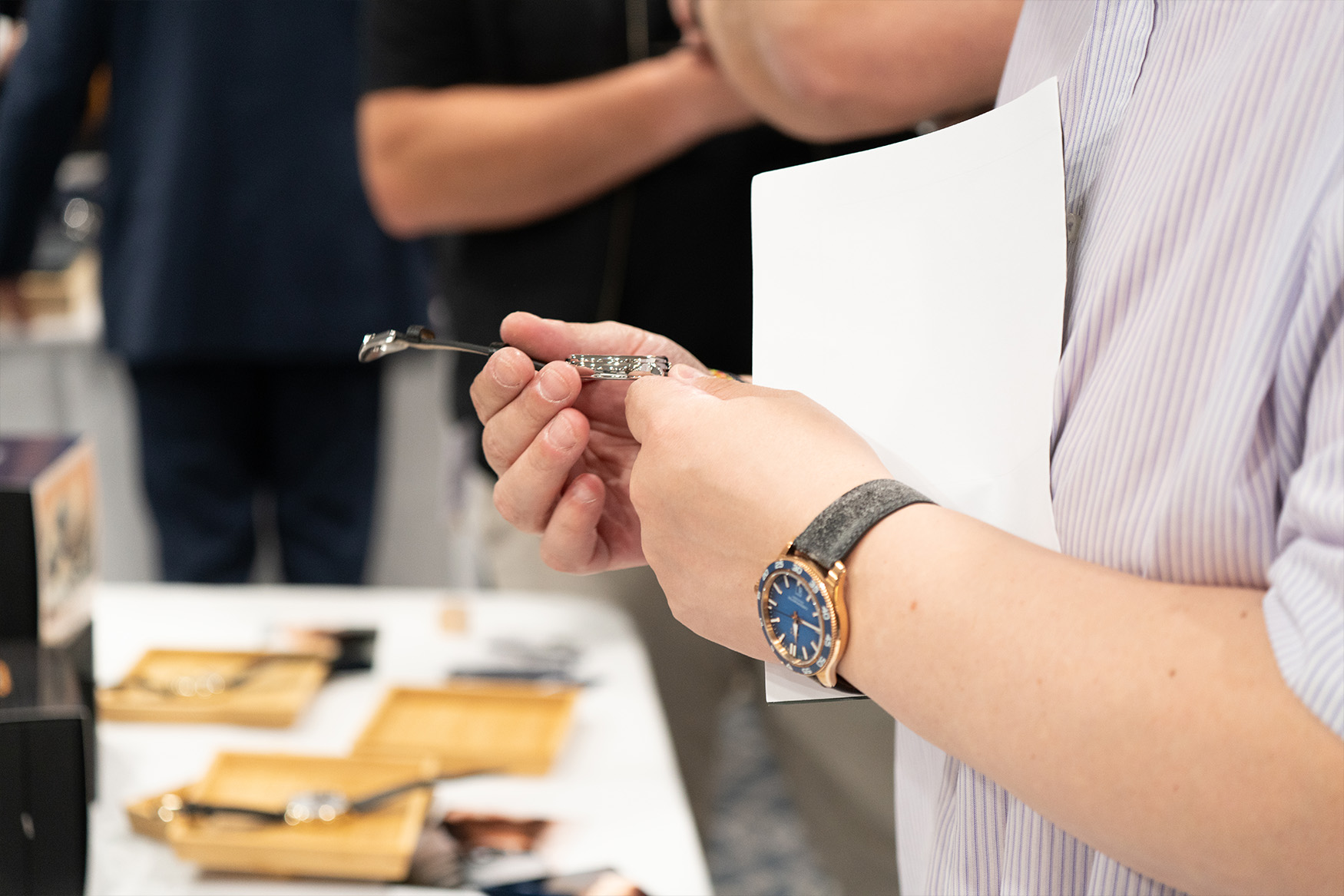
Perhaps the market has simply changed. A decade ago, “microbrand” implied something fresh and exciting. Today, there are hundreds, if not thousands, of small watch companies competing for attention. For every genuinely thoughtful independent producing something original, there are dozens assembling catalogue parts with little to distinguish themselves beyond a logo and a colourful dial. Fairly or unfairly, the word has become associated with the latter just as often as the former. That leaves many successful smaller brands in an awkward position. They now have international retailers, dedicated design teams, proprietary components and increasingly sophisticated manufacturing, yet they’re still grouped under the same umbrella as a Kickstarter project that launched a few months ago. It’s easy to understand why some brands feel they’ve outgrown the label.

Maybe that’s why I find myself wondering whether “small independent” or “indie” has become the more useful description. It tells you something meaningful about the business without implying a particular level of quality, production volume or stage of development. More importantly, it recognises that independence is often the defining characteristic, not the size of the company. Then again, perhaps the answer isn’t to abandon the word altogether. If collectors still hear “microbrand” and think of passionate people making interesting watches outside the industry’s biggest players, maybe the term isn’t hurting brands at all. Maybe it’s simply become too broad to be genuinely helpful. Either way, it’s an interesting discussion, and I have a feeling it won’t be the last time the watch industry finds itself debating what a microbrand actually is.
Wrist shot of the week: A tasty Tonda
View this post on Instagram
More of a carousel of beautiful shots than just one single wrist shot this week, but Corey, otherwise known as @enthuseddad, caught my attention with these shots of his gorgeous Parmigiani Fleurier Tonda Minute Rattrapante. He’s lustfully sporting it on a grey rubber strap, paired with a dial that somehow manages to make grey look sensational.
Time+Tide Shop pick of the week: Wren Diver One Obsidian
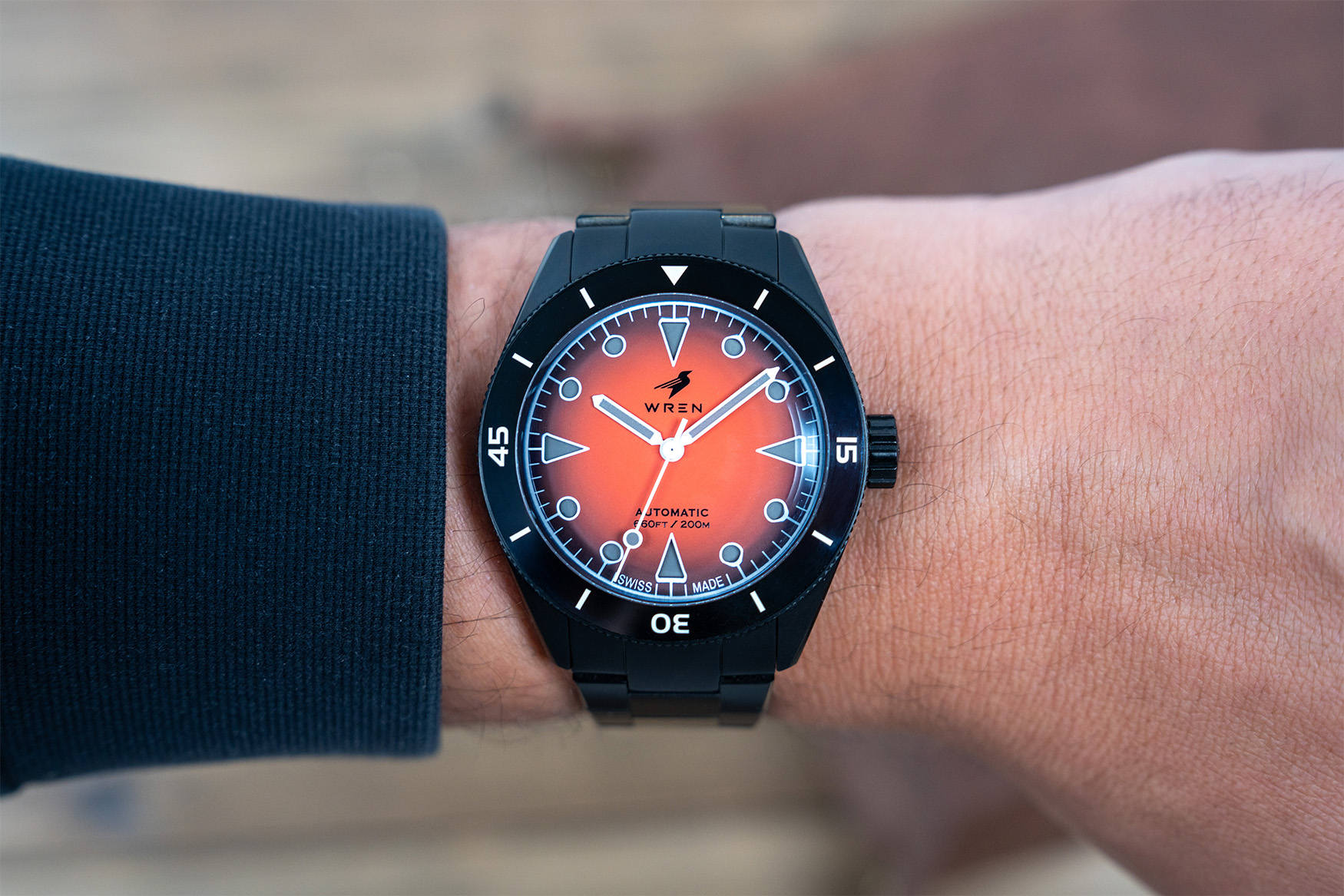
Wren’s second collaboration with Ben’s Watches builds on the success of last year’s Diver One Magma by wrapping its molten orange fumé dial in a stealthy black DLC-coated case and bracelet. The result is a striking contrast that gives the familiar Diver One platform an entirely different personality without altering its proven formula. Measuring 41mm with 200 metres of water resistance and powered by the dependable Sellita SW200 automatic movement, it remains an enthusiast-focused everyday dive watch. Limited to an initial run of just 100 numbered pieces and supplied with both a matching DLC bracelet and an orange FKM rubber strap, the Diver One Obsidian is another confident evolution of a distinctive entry in the independent dive watch scene.
It’s exclusive to the USA, and there are only a few left, but you can order the Wren Diver One Obsidian online at the Time+Tide Shop. Price: US$1,195
Our favourite Time+Tide Coverage of the week
Which Omega Speedmaster Should I Buy?: The White Dial Moonwatch | Four Ways to Fly to the Moon EP.1
The white-dial Omega Speedmaster Professional has quickly become one of the year’s most talked-about releases, but does it live up to the hype? Andrew and Justin take an honest look at the watch, exploring its design, history, wearability and why it might just be the Speedmaster to win over an entirely new generation of collectors.
Where the First Automatic Wristwatch Was Really Made | Fortis Manufacture Visit + CEO Interview
Everyone knows the automatic watch, but remarkably few know the story behind its invention. Russell travels to the Fortis manufacture in Grenchen to uncover the remarkable origins of the world’s first serially produced automatic wristwatch, and why history hasn’t given John Harwood the recognition he deserves.
Vacheron Constantin Innovations: from Twin Beat to Overseas Ultra-Thin | Inside the Archives Ep. 3
What does innovation look like when you’ve been making watches continuously for 271 years? Andrew, Justin and Vacheron Constantin’s Christian Selmoni explore five extraordinary timepieces from the brand’s archives, revealing how two centuries of technical breakthroughs continue to shape one of watchmaking’s oldest manufactures today.