


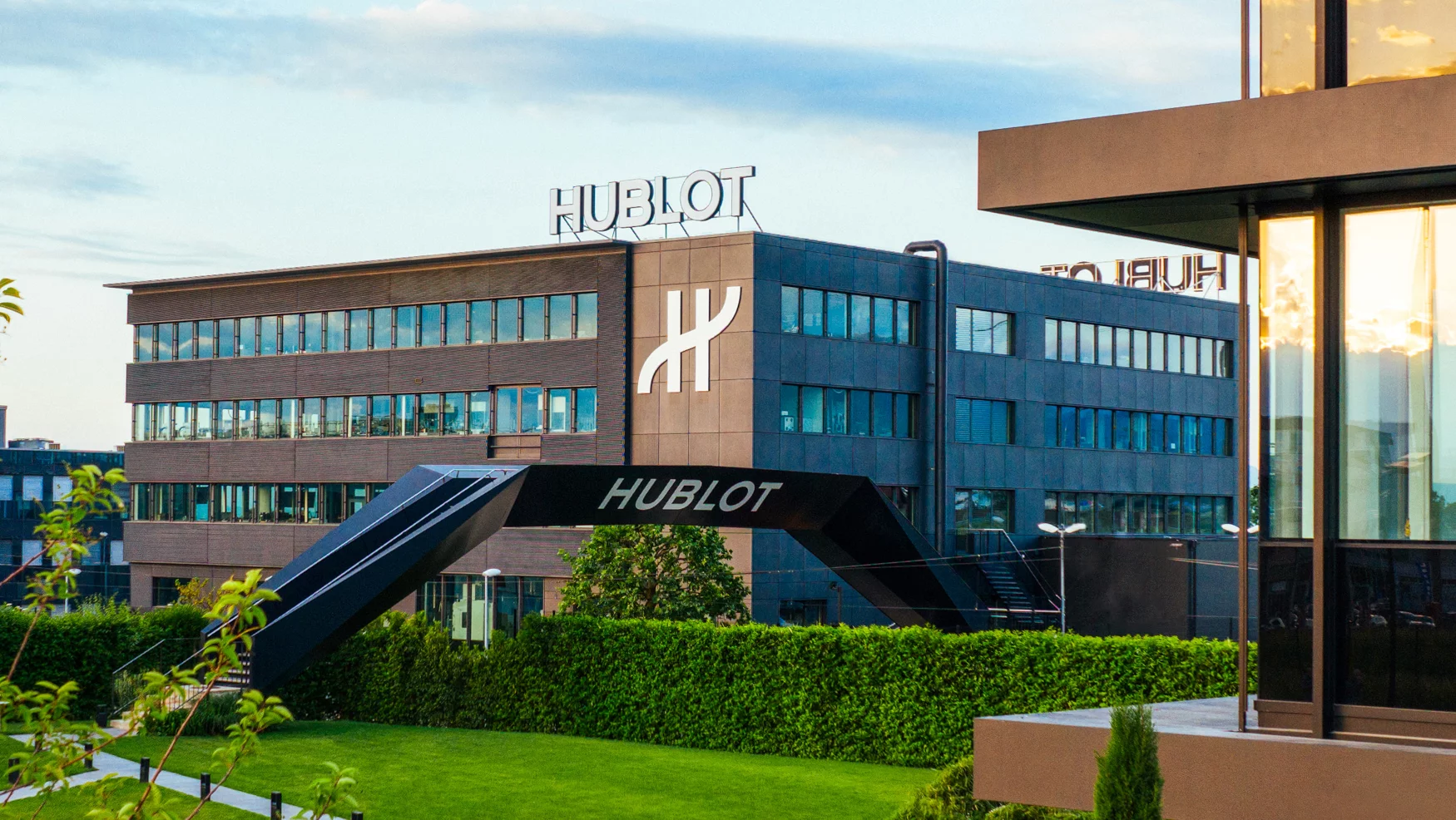
The Art of Fusion in three chapters: a deep dive into Hublot’s past, present and future
Jason LeeI’ve been collecting watches for more than a decade now, long enough to stop worrying about trends or what anyone else thinks of what’s on my wrist, and to focus instead on buying what I genuinely enjoy and can sensibly afford. It wasn’t always that way. Back in college, I dismissed Hublot outright, seeing it as the choice of people with too much money and not enough interest in watchmaking. Fast forward to today, and the Hublot Spirit of Big Bang Frosted Carbon is my favourite piece in a collection of eight watches.

For me, it captures the brand’s “The Art of Fusion” ethos in a single object: the frosted carbon case is a tangible expression of Hublot’s material experimentation, while the tonneau‑shaped design keeps the watch visually engaging no matter how often I wear it. It’s a playful, extroverted counterpoint to the more familiar Rolex staples in my box, built from unconventional materials and powered by a historic Zenith El Primero–based movement that’s been beautifully skeletonised and left open to view on the dial side. That journey—from writing Hublot off to having one as the emotional centre of my collection—feels like the right place to start an in‑depth look at how this young, often controversial marque has evolved into one of the most talked‑about names in contemporary watchmaking.
From portholes and rubber straps: Hublot’s disruptive beginnings
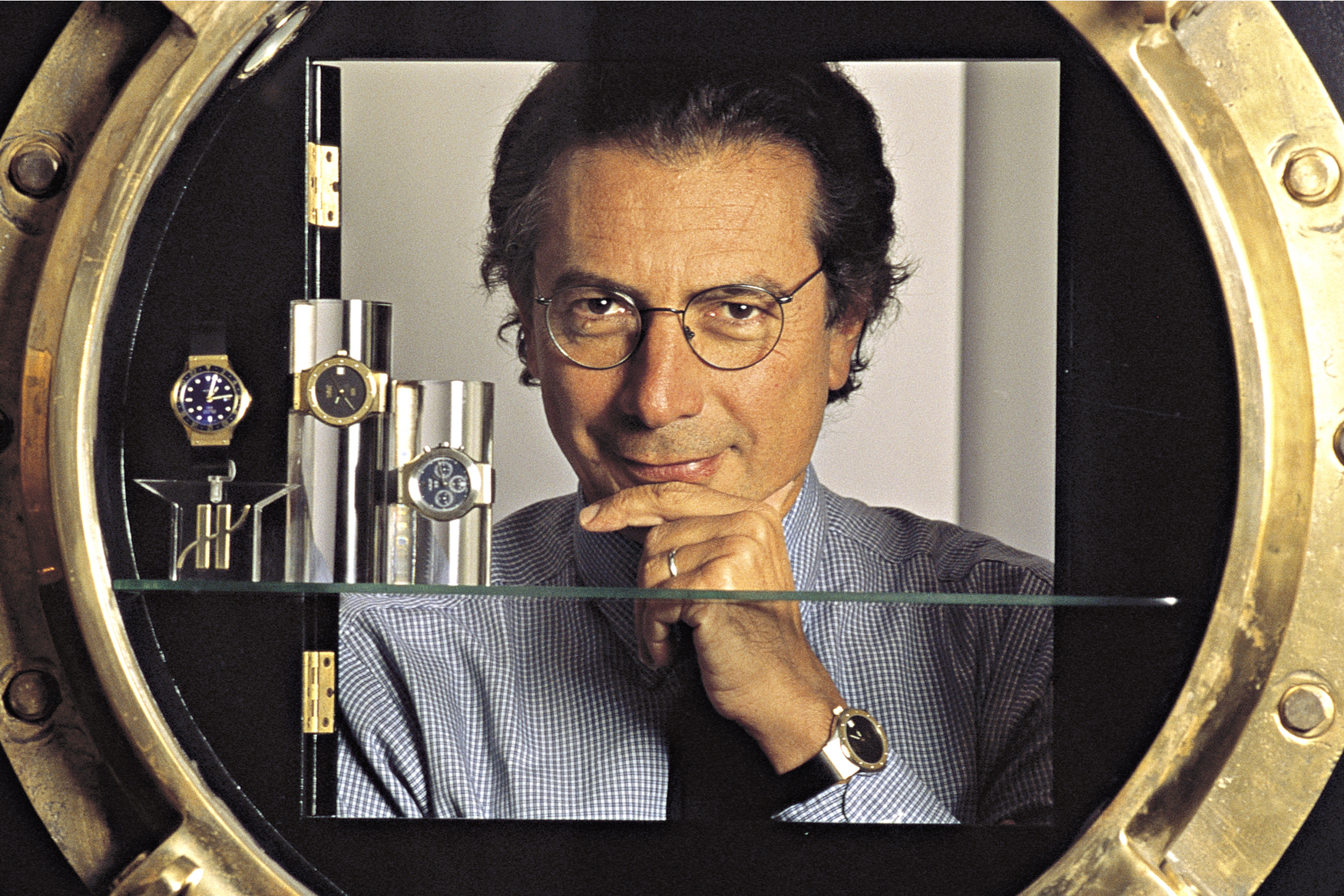
Hublot is unusual among high‑end Swiss brands in that its story doesn’t begin in the 19th century with pocket watches and observatory trials. It begins in 1980 with a single, very specific idea. Italian watch designer Carlo Crocco wanted to build a watch that matched a modern, active lifestyle: light, water‑resistant and genuinely comfortable. The solution he arrived at was both simple and radical. He paired a gold case with a rubber strap, a combination that, at the time, bordered on heresy in traditional Swiss luxury watchmaking. Gold belonged on leather. Rubber belonged on cheap sports watches. Putting them together was a deliberate violation of the rulebook.

The design itself took inspiration from a ship’s porthole. The round bezel, secured by a ring of visible screws, sat on a clean, almost minimalist dial, with the integrated rubber strap flowing straight out of the case. The aesthetic was nautical, modern and clearly industrial in its visual language. It didn’t look like what a “proper” luxury watch was supposed to look like in 1980.

And yet, the concept hit a nerve. The combination of precious metal and practical strap, plus the emphasis on comfort and water resistance, made the watch an attractive proposition for people who wanted something they could actually wear every day. It found particular favour among European royalty and celebrities, giving Hublot an aura of discreet, contemporary prestige long before the brand started leaning into the louder image many associate with it today. This early period, roughly 1980 to 2004, is sometimes reduced to a pre‑history before the Big Bang. That undersells it. The founding idea—fusion of materials, a strong, recognisable case shape, and comfort‑first design—pretty much lays the groundwork for everything that follows.
The “Art of Fusion” and the Big Bang era
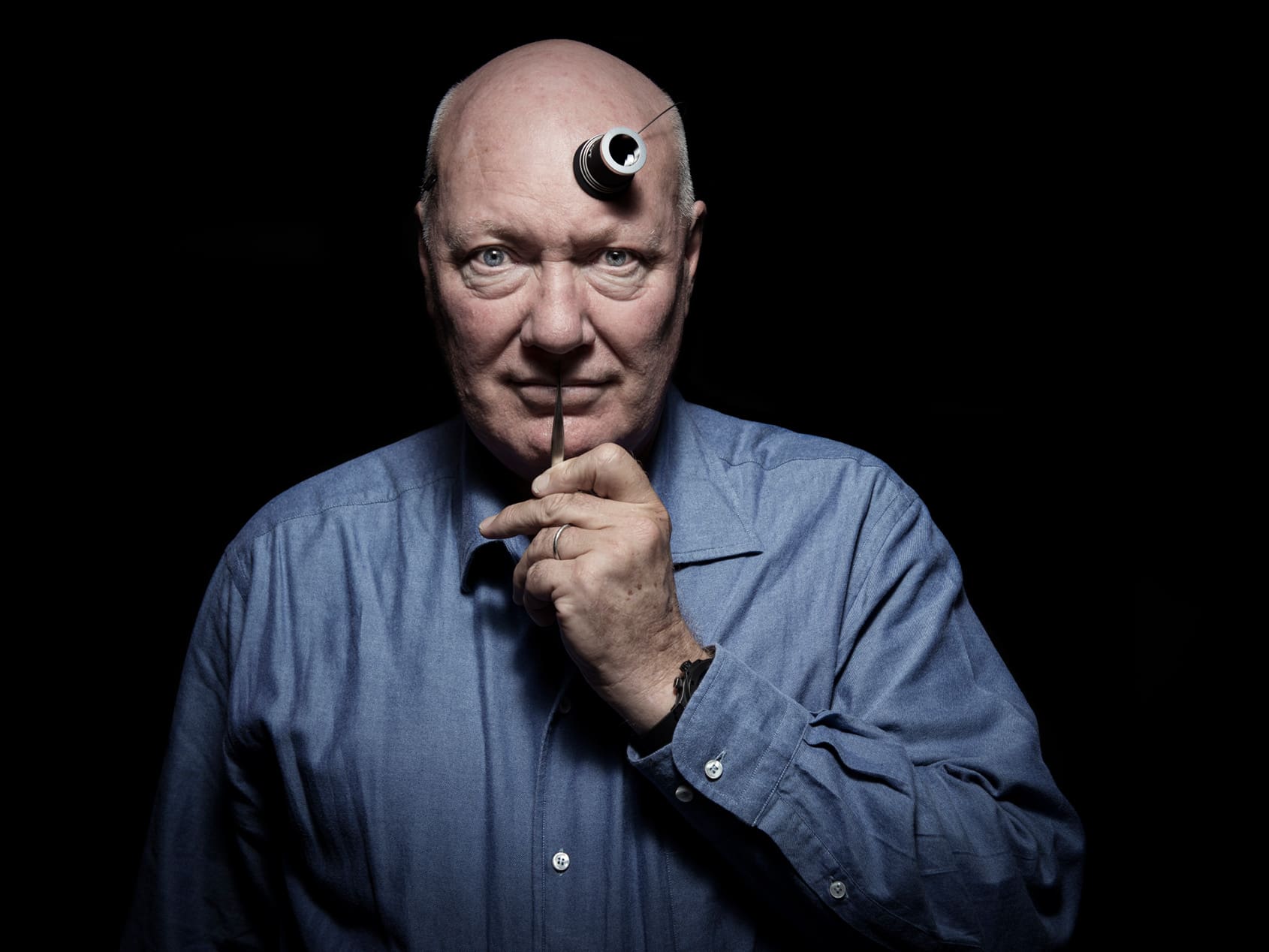
The Hublot most collectors think of today really takes shape in 2005, when Jean‑Claude Biver arrives as CEO. Biver does two key things: he gives the brand a clear philosophy, and he introduces a watch that makes that philosophy visible from across the room. The philosophy is “The Art of Fusion”. It’s more than a line for the catalogue. It describes Hublot’s approach to almost everything: fusing traditional horology with avant‑garde materials, blending past and future, and mixing cultural references that don’t usually share the same sentence. It’s not about understatement; it’s about making that fusion visible and intentional.
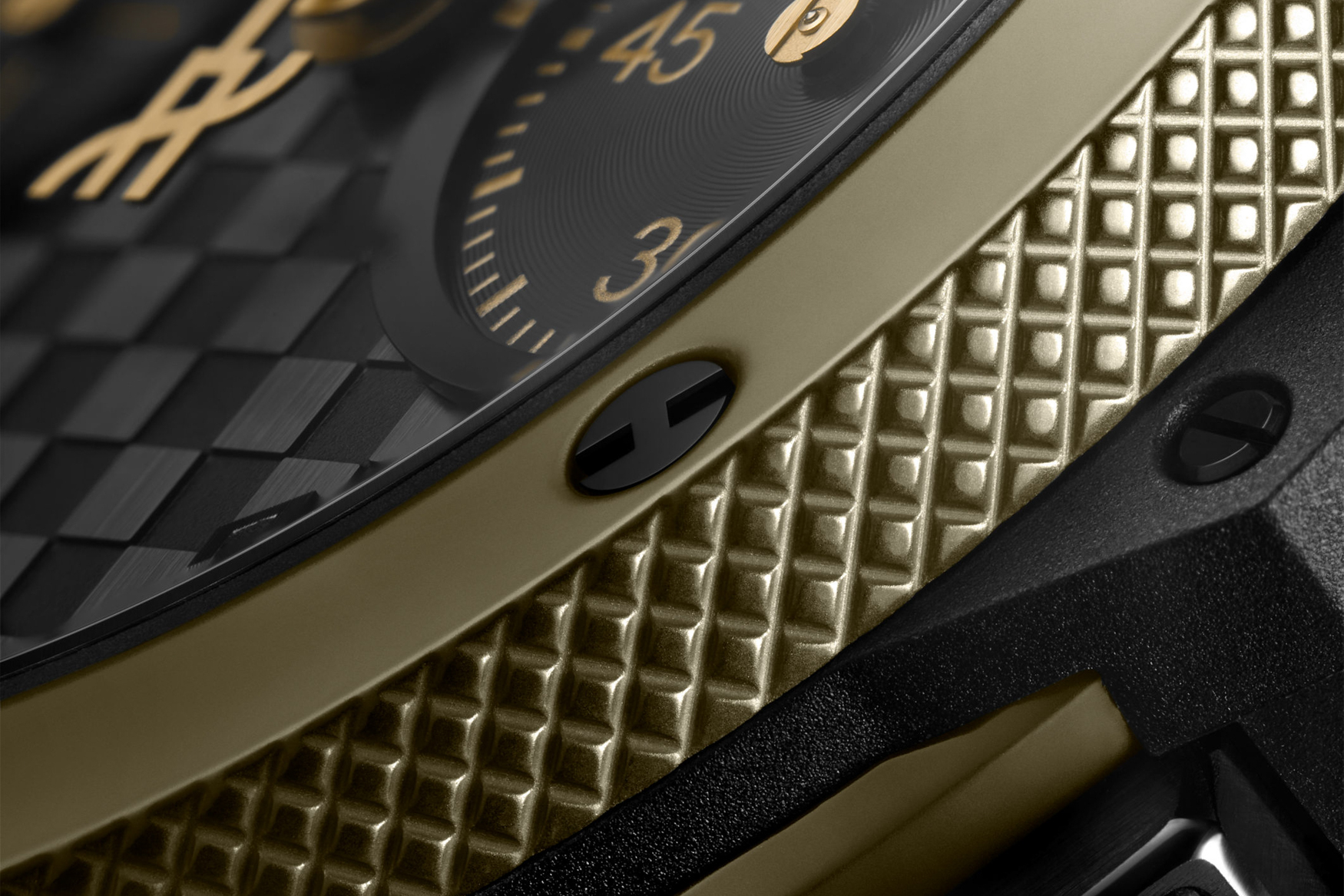
The physical expression of this is the Big Bang, launched the same year. If Crocco’s original watch is a porthole, the Big Bang is a small piece of modern architecture for the wrist. The case is built like a sandwich, with different layers of material stacked to create depth. The bezel features six H‑shaped screws that instantly become part of Hublot’s visual DNA. A sharply cut rubber strap integrates into the case with distinctive end‑pieces, making the watch sit securely and comfortably while emphasising its outline.

It’s no accident that Hublot talks about the Big Bang being recognisable even without a logo on the dial. The proportions, the screws, the layered construction—all of it is designed so the watch reads as Hublot at a glance. Love it or hate it, the silhouette is hard to mistake. In other words, the Big Bang isn’t just a model; it’s a design language the entire brand can hang off.
The alchemist of materials

If the 2000s are about defining Hublot’s look, the 2010s and beyond are about turning materials into a core part of the brand’s identity. Lots of brands talk about case materials; relatively few spend years developing their own alloys and ceramics from scratch. This is where Hublot leans heavily into the “fusion” idea and starts behaving almost like a materials lab.
Magic Gold: scratching the surface of gold’s limitations

Gold is beautiful. It’s also relatively soft, which is not ideal for a modern sports watch. Hublot’s answer, launched in 2012 after four years of joint research with the École Polytechnique Fédérale de Lausanne (EPFL), is Magic Gold. Magic Gold combines 75% gold with 25% ceramic (boron carbide). On paper, that sounds like a simple alloy; in practice, it results in an 18K gold that is significantly harder than regular gold and even tougher than stainless steel on the Vickers hardness scale. The idea is straightforward: you get the warmth and prestige of gold, but in a form that’s much more resistant to scratches.

The first outing for Magic Gold is the Big Bang Ferrari Magic Gold, neatly tying together Hublot’s material story with an automotive partnership. It’s an early signal that materials will be central to how Hublot defines itself going forward.
Coloured ceramic and Magic Ceramic

Next comes coloured ceramic. In 2018, Hublot announced it has developed a vivid red ceramic in‑house, overcoming a long‑standing issue: pigments tend to burn out or degrade at the very high firing temperatures (above 1,500°C) normally used for technical ceramics. To get around this, Hublot adopts Spark Plasma Sintering (SPS) technology, allowing high‑density ceramic to be sintered at lower temperatures that preserve colour. The result is a ceramic that still delivers on hardness and durability but can now be produced in saturated red, yellow, blue and other tones. In wrist terms, that translates into Big Bangs and other references that look like they’ve been carved from blocks of pure colour.
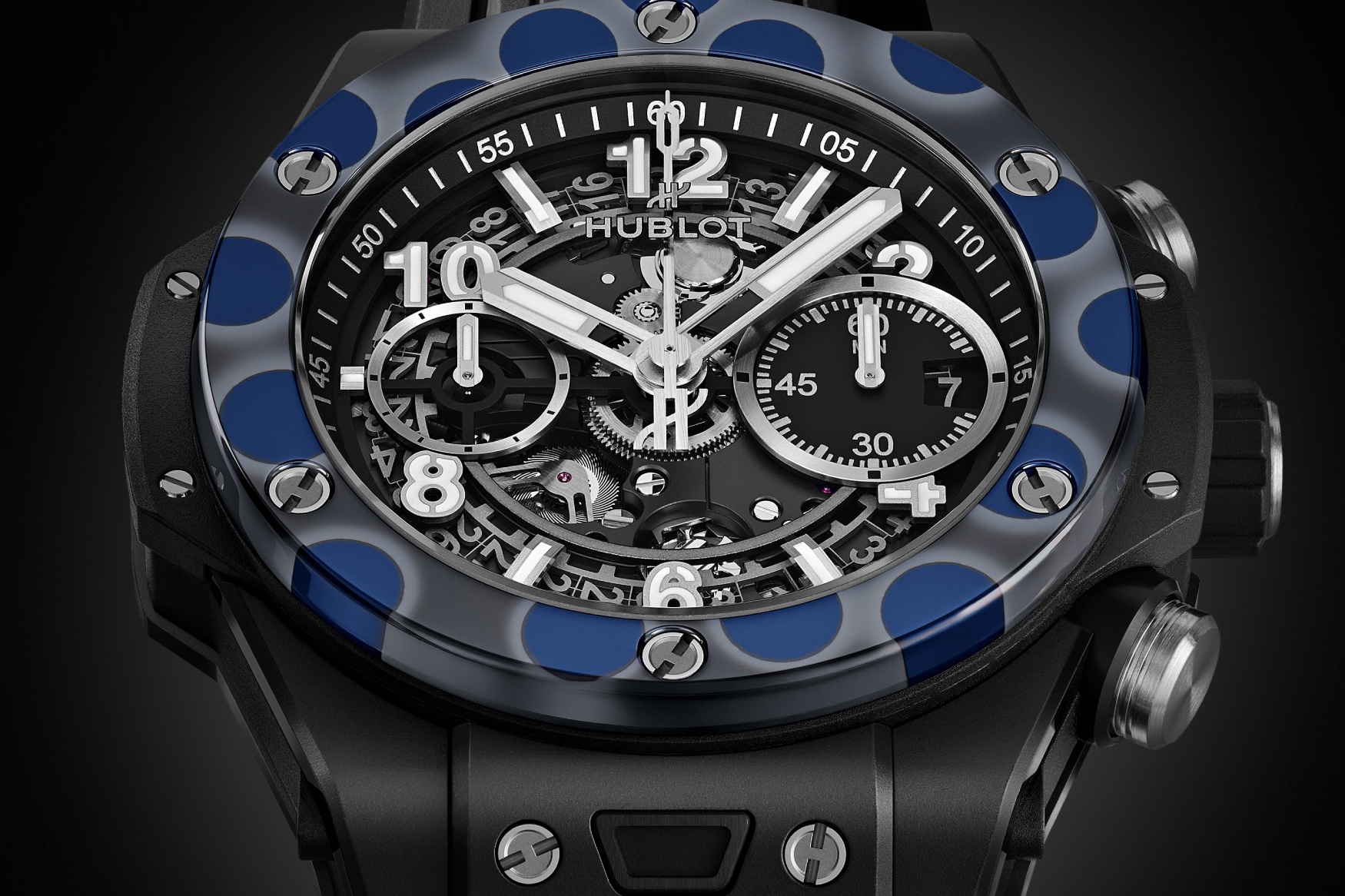
Magic Ceramic, introduced via a 20‑piece limited Big Bang Unico Magic Ceramic in 2025, pushes this further. Achieving multi‑coloured ceramics isn’t as simple as layering pigments; it demands fine control of material science and firing conditions to prevent colours blending into a muddy mess. The watch that debuts the material reads almost like a proof‑of‑concept that Hublot is prepared to invest heavily in this kind of experimentation.
Sapphire and SAXEM: transparency as a design choice

Sapphire is familiar in watchmaking as a material for crystals; using it for full cases is another matter entirely. In 2016, Hublot managed to produce a full sapphire case, taking advantage of the material’s hardness, transparency and scratch resistance. Once that door is open, Hublot starts experimenting with colour, creating sapphire cases in black, yellow, blue, pink and more. These are more than just colourful novelties; they showcase the skeletonised movements inside in an unusually direct way, blurring the line between case, crystal and movement architecture.

In 2019, Hublot introduced SAXEM, a proprietary synthetic material that combines sapphire‑like transparency with a brilliance and durability comparable to diamond. Thanks to its cubic crystal structure, Saxem maintains a perfectly uniform colour and tone from every angle. The effect, especially in the Big Bang and MP pieces that use it, is of movements suspended in blocks of coloured light.
Movements as architecture
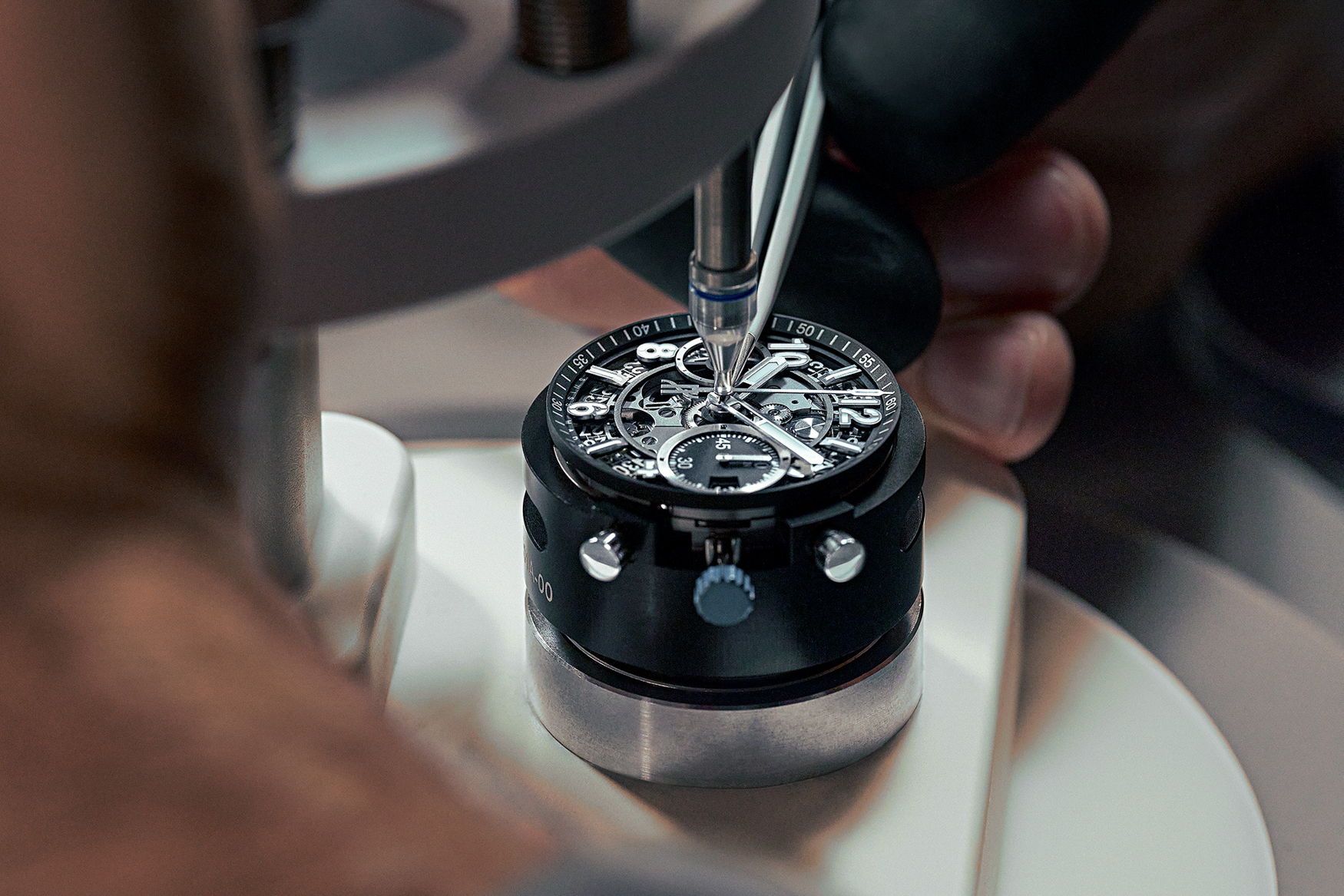
For a long time, detractors of Hublot argued that behind the bold cases, there wasn’t much in the way of serious watchmaking. That criticism becomes harder to sustain once you look at what the brand has been doing with its in‑house movements over the past decade and a half, designing calibres so that their architecture reinforces the visual identity of the watch.
Unico: an integrated chronograph built for display
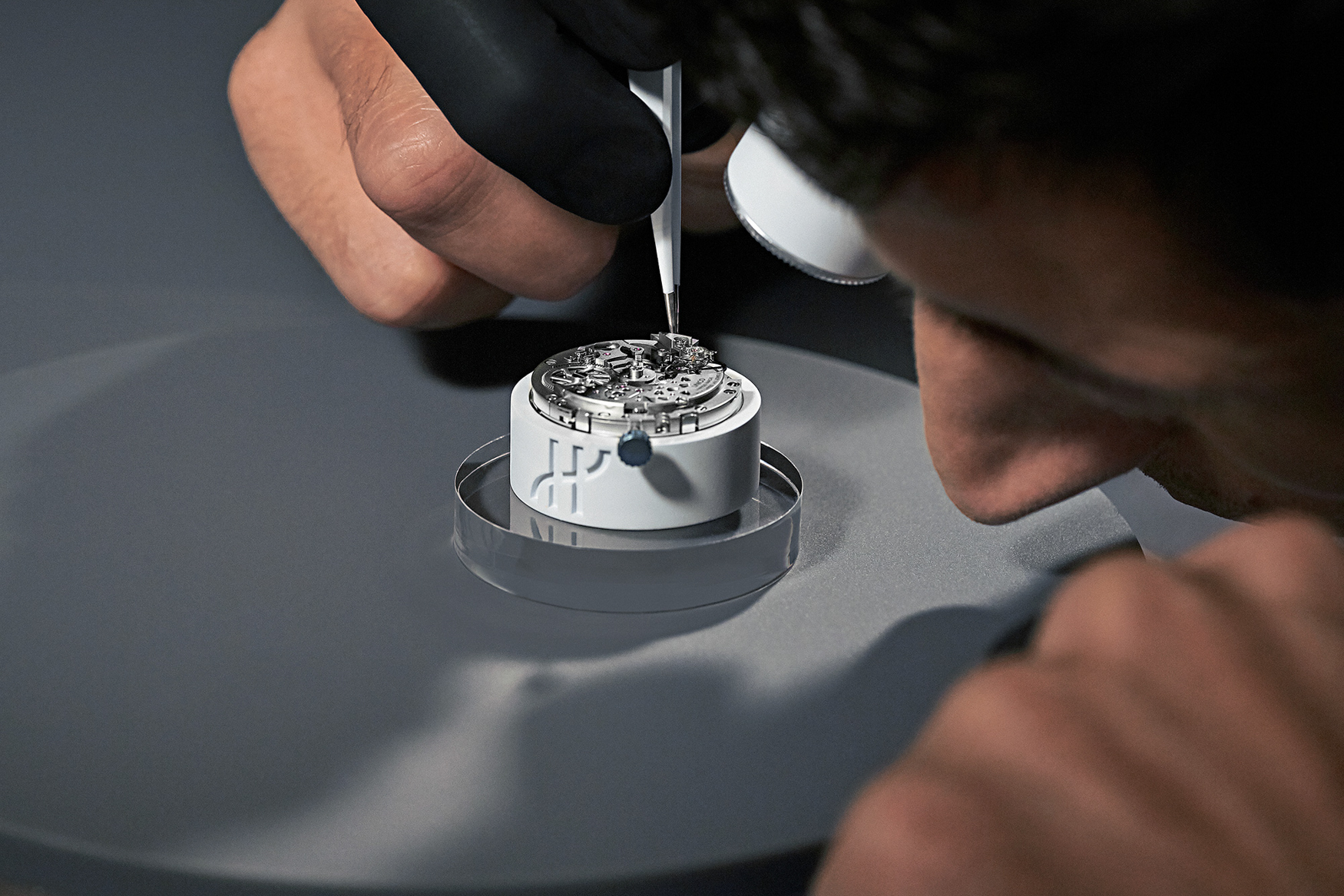
The Unico family is Hublot’s workhorse integrated chronograph. The current HUB1280 calibre is a second‑generation movement that builds on the original HUB1242 (released in 2010) but simplifies the architecture to improve reliability. The thickness has been trimmed from 8.05 mm to 6.75 mm, helping watches wear more comfortably. A unidirectional gear train, special clutch system and ceramic ball bearings are employed to reduce noise and enhance energy transmission, while five patents—covering the click mechanism, parts of the chronograph assembly, adjustment tolerances and the cannon pinion—underscore the amount of basic research involved.

Importantly, Unico is designed to be seen. In many references, the dial is openworked specifically to showcase the chronograph works, making the movement a central part of the watch’s visual impact.
Meca‑10 and long‑power‑reserve statement pieces

First shown in 2016, the Meca‑10 is a manually wound skeleton movement that uses a ring‑shaped mainplate with bridges mounted on top. The result looks almost like a technical construction set, with an emphasis on mechanical transparency. A second‑generation version, scaled for a 42 mm Big Bang case, adds three linear bridges, satin‑brushed finishing and hand‑polished bevels. A rack‑and‑pinion system links straight and circular gears to create an intuitive 10‑day power‑reserve display. The balance is visible on the dial side, and a silicon escape wheel, plus fine adjustment and hacking mechanism, are there to support practical precision as much as aesthetics.

In the MP‑11 14‑Day Power Reserve, that fascination with long autonomy is pushed further. A patented transmission system links twin mainspring barrels to maximise energy transfer, while the movement’s three‑dimensional layout places its components front and centre. These are watches designed to make you think about how energy moves through a mechanical object over time.
Tourbillons tailored to the case

Hublot’s approach to tourbillons follows the same logic: start with the case concept, then design a movement that suits it. Take the MP-10 Tourbillon Weight Energy System, powered by the in-house calibre HUB9013, which reimagines the round watch as a vertical structure with two freely moving blocks (weights) on either side of the central movement. These weights are linked to racks, allowing bidirectional winding as they move. The crown at 12 o’clock is for winding; a secondary crown on the caseback handles time setting.
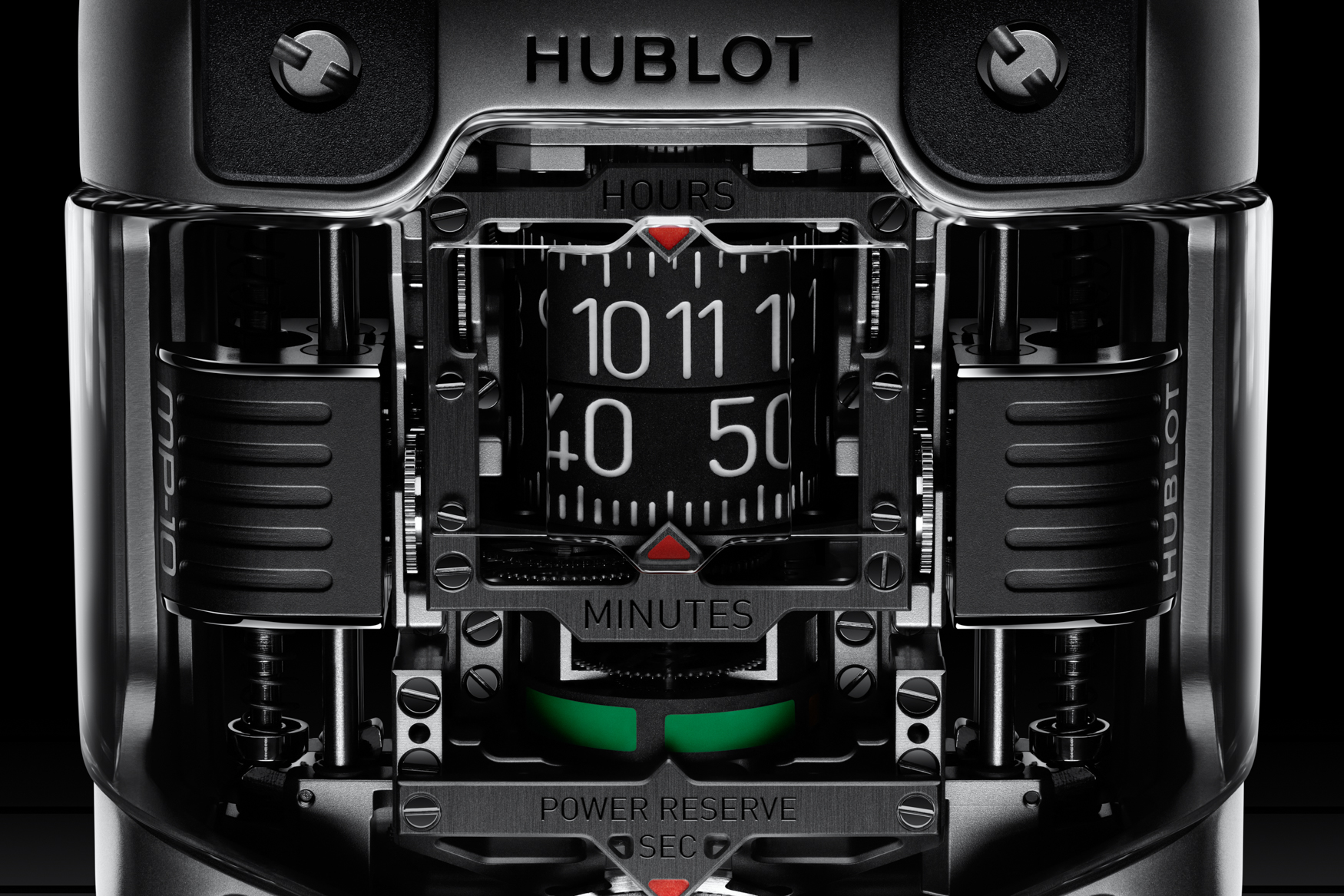
The calibre inside suggests a brand that sees movements not just as engines to be hidden behind a dial, but as central design elements to be integrated into the case architecture.
Why Hublot still divides opinion

All of this—materials research and in‑house movements—has not stopped Hublot from being one of the most polarising names in watch collecting. Case sizes can be large. Designs are rarely subtle. Limited editions are frequent. For enthusiasts steeped in mid‑century design language and conservative tastes, it can all feel like too much.
But for me, spending meaningful time with a watch like the Spirit of Big Bang Frosted Carbon makes it difficult to write Hublot off as mere noise. The case texture catches the light differently from anything in forged carbon or ceramic. The tonneau shape avoids the visual fatigue that can come with owning yet another round sports watch. The openworked Zenith‑derived movement on the dial side reminds you that, underneath the surfaces and colours, real mechanical substance is beating away.

Seen through that lens, Hublot’s history over the last 45 years reads less like an exercise in provocation and more like a consistent exploration of a few core ideas: fusion of materials, visible mechanics, and a willingness to sit at the intersection of sport, art, design and science. You don’t have to love every watch the brand makes. Many collectors never will. But it’s hard to deny that Hublot, for better or worse, has helped push modern watchmaking into territories it might otherwise have avoided.
For some, that’s precisely the point. For others—my younger self included—it takes a Spirit of Big Bang on the wrist to realise that behind the carbon, sapphire and slogans lies a coherent, if unconventional, vision of what a mechanical watch can be in the 21st century.