


Franck Muller Vanguard Damascus brings ancient technology to modern horology
Russell SheldrakeExperimenting with case materials is a great way to push the boundaries of what a watch is capable of. Here, Franck Muller has brought one of the most highly prized forms of steel, combining decorative and practical functionalities into its most modern family, the Vanguard. Damascus steel has been lauded over the centuries for the way it mixes the best qualities of two different metals into one, whilst simultaneously creating mesmerising patterns in the object it forms, leaving a recognisable fingerprint of its high quality.
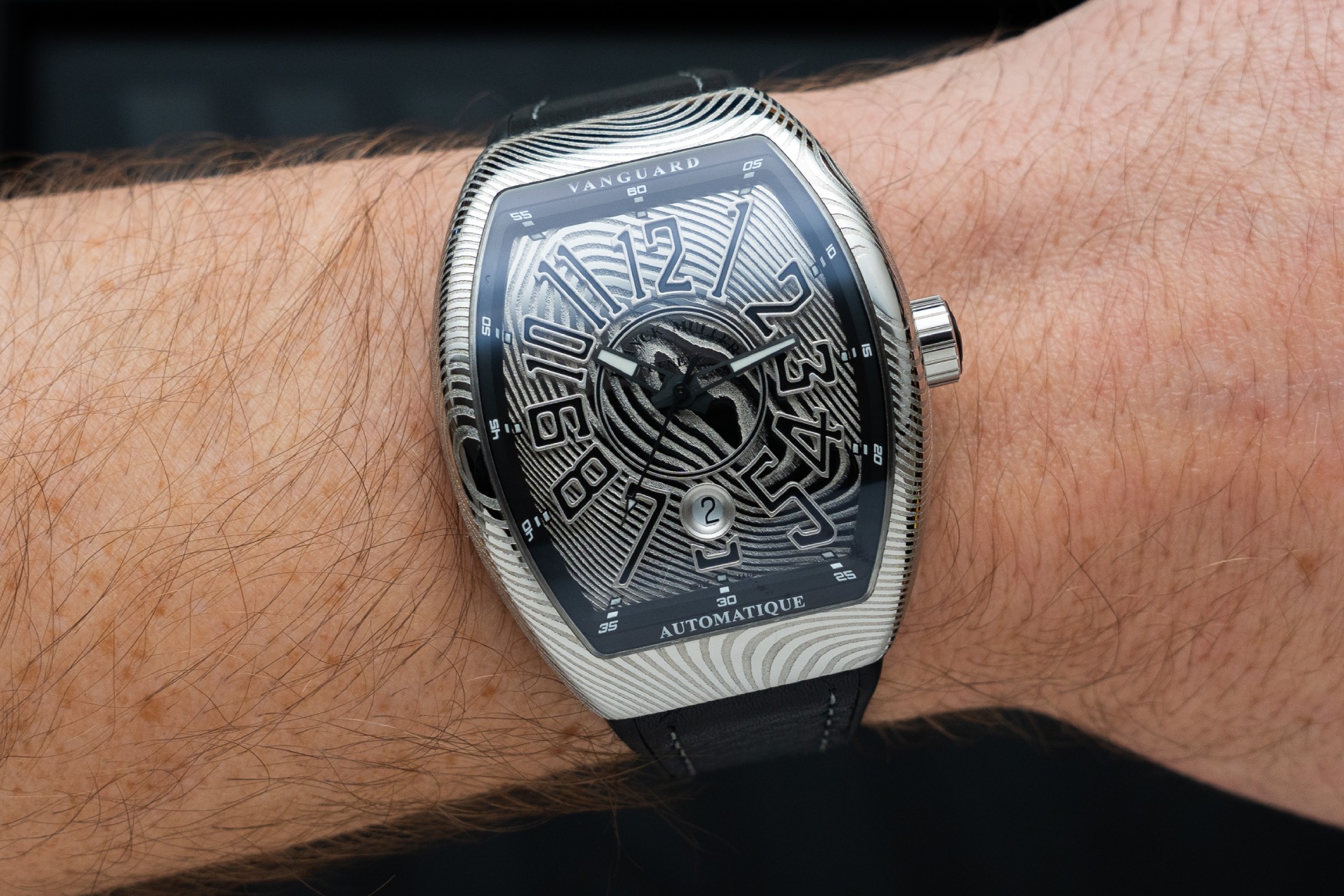
A defining characteristic of Franck Muller in the last decade and a half has been its willingness to embrace modern design and unapologetically be brash and bold with its watches, and the Vanguard, as the name suggests, has been at the forefront of that. This is why the use of Damascus steel feels so at home on this model. There is no hiding what this watch is made from; its unique pattern is distinguishable from a room away.
The case

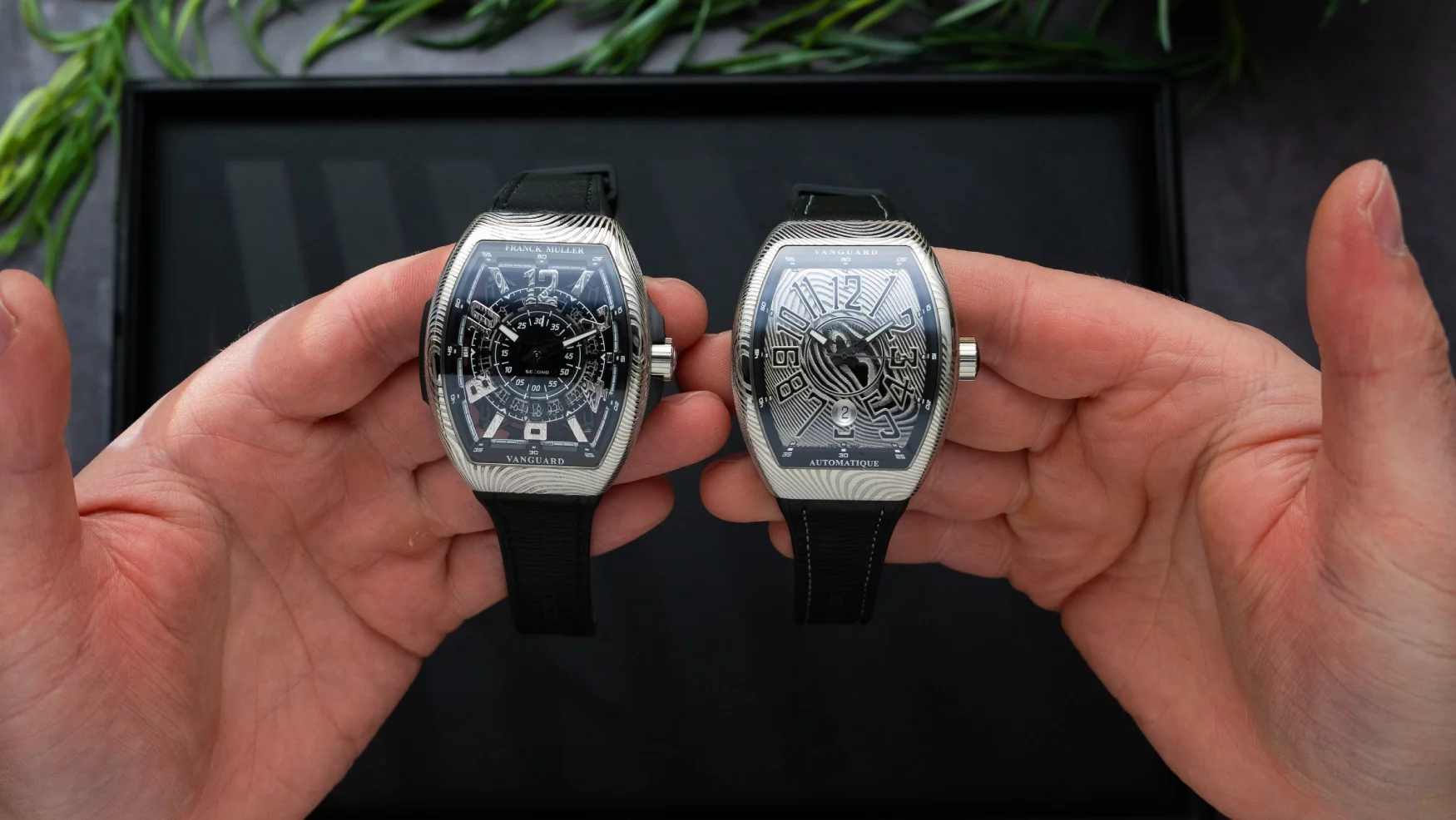
The two models we are looking at here, the Vanguard Damascus and Vanguard Damascus Racing, both have the same case dimensions of 42.5mm across, 52.7mm long, and 12.6mm thick. The tonneau case shape makes the most of the unique look of Damascus, with thick sections at both the top and bottom of the case that proudly show the fingerprint pattern. It is also this tonneau shape that Franck Muller has been at the forefront of defining its usage in modern watchmaking. Of course, there are other brands that have made use of it, but Franck Muller has adopted it wholesale, making it a calling card for the brand today.

The tonneau shape also means a lug-less design that allows the strap to attach seamlessly to the Damascus steel and follow the natural curvature of the case around the wrist. But more on that strap later. The middle of the case is split, allowing for a black band to run around its perimeter; this allows the crown to not overly disrupt the flow of the case, and instead sit organically inside this split.
The caseback on the standard time and date model is closed, allowing for the brand’s self-proclaimed “Master of Complications” tag line on the back. This stands in contrast to the back of the Racing model, which has a full exhibition caseback to allow you to see the movement and for light to pass straight through the skeletonised dial and the entire watch itself. The Racing model also features chunky crown guards to give it a much more rugged and sporty feel.
The dial

The main difference between the two is that the Racing model features a skeletonised dial and date. This means that instead of the dial being made from Damascus steel, the individual hour markers have been cast in the mixed-metal alloy. An interesting and striking design choice that separates this from nearly every other skeletonised watch on the market, which tends towards high-contrast and lume for its markers to aid visibility.

This might be the only time I say this, but I think the solid dial version of this watch is more striking than the skeletonised one. Thanks to the swirling Damascus, the standard model is given heaps of personality, and I think this only amplifies the forged fingerprint that this metal produces. On the solid dial, you also get the full force of Franck Muller’s elongated Arabic numerals, whereas on the Racing dial they are slightly sacrificed for better skeletonisation.
The movement
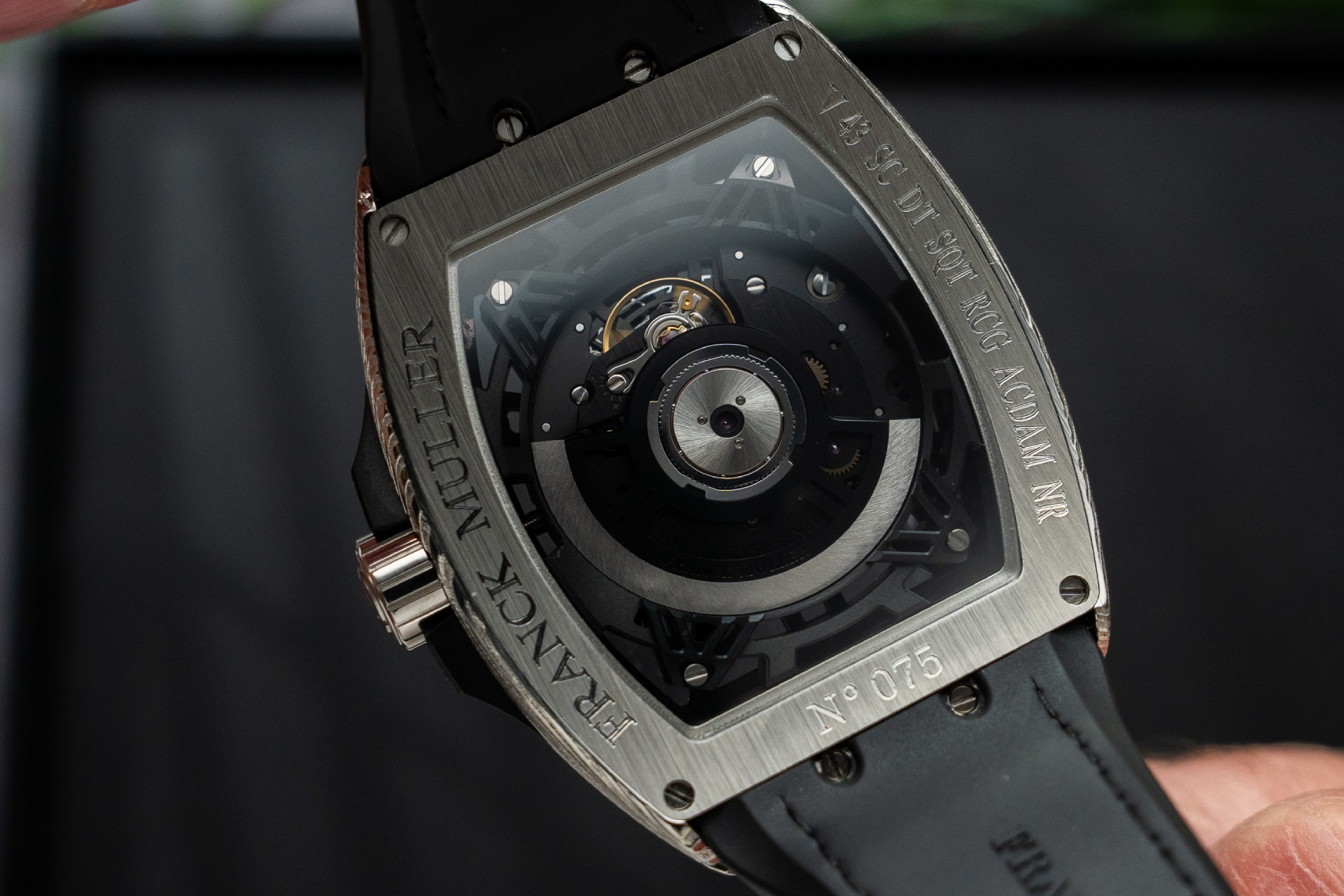
Both of these watches are also fitted with similar movements, again the main difference being that the calibre inside the Racing is slightly skeletonised. But they both carry 42 hours of power reserve, running on an automatic winding system, and have a balance that beats at 28,800 vph. You get a great view of this movement on the Racing model, but it remains entirely hidden on the time and date.
The strap

You get a tapered rubber strap on both of these watches, which is fairly standard, but what isn’t standard is the clasp that closes the straps off. This is where we find our final use of Damascus steel, as the deployant clasp is also made out of the legendary metal. The rubber straps are slightly dressed up as they have leather grain toppers on them that offer a more luxurious finish than normal rubber might.
The verdict

This is not the first time Franck Muller has used this material, and it’s not their first time experimenting with alternative case metals either. But it’s always good to see how they make the most of it in these new lines. You even get Damascus steel being used on the folding buckle that connects the grosgrain leather strap.
Personally, I’m more of a fan of the simple, time and date model, as you get more impact from the Damascus pattern with it being spread across the entirety of the solid dial. If you are going to get a watch made from this unusual metal, you may as well show it off as much as you can. While the Racing model has it’s own charm with its skeletonised dial showing off the movement finishing underneath, I want as much Damascus as I can get. But maybe that’s just me.
Franck Muller Vanguard Damascus collection pricing and availability
The new Franck Muller Vanguard Damascus collection is available now but exclusive to South East Asia and Australia. Price: A$23,700 (time and date), A$45,100 (Racing)
| Brand | Franck Muller |
| Model | Vanguard Damascus collection |
| Case Dimensions | 42.5mm (D) x 12.6mm (T) x 52.7mm (LTL) |
| Case Material | Damascus steel |
| Water Resistance | 30 metres |
| Crystal(s) | Sapphire front and back |
| Dial | Damascus steel Skeleton |
| Strap | Rubber, deployant clasp |
| Movement | MVT FM 800-DT, automatic MVT FM 2800-SQ01, automatic |
| Power Reserve | 42 hours |
| Functions | Hours, minutes, seconds, date |
| Availability | Only available in South East Asia |
| Price | A$23,700 (time and date) A$45,100 (Racing) |