


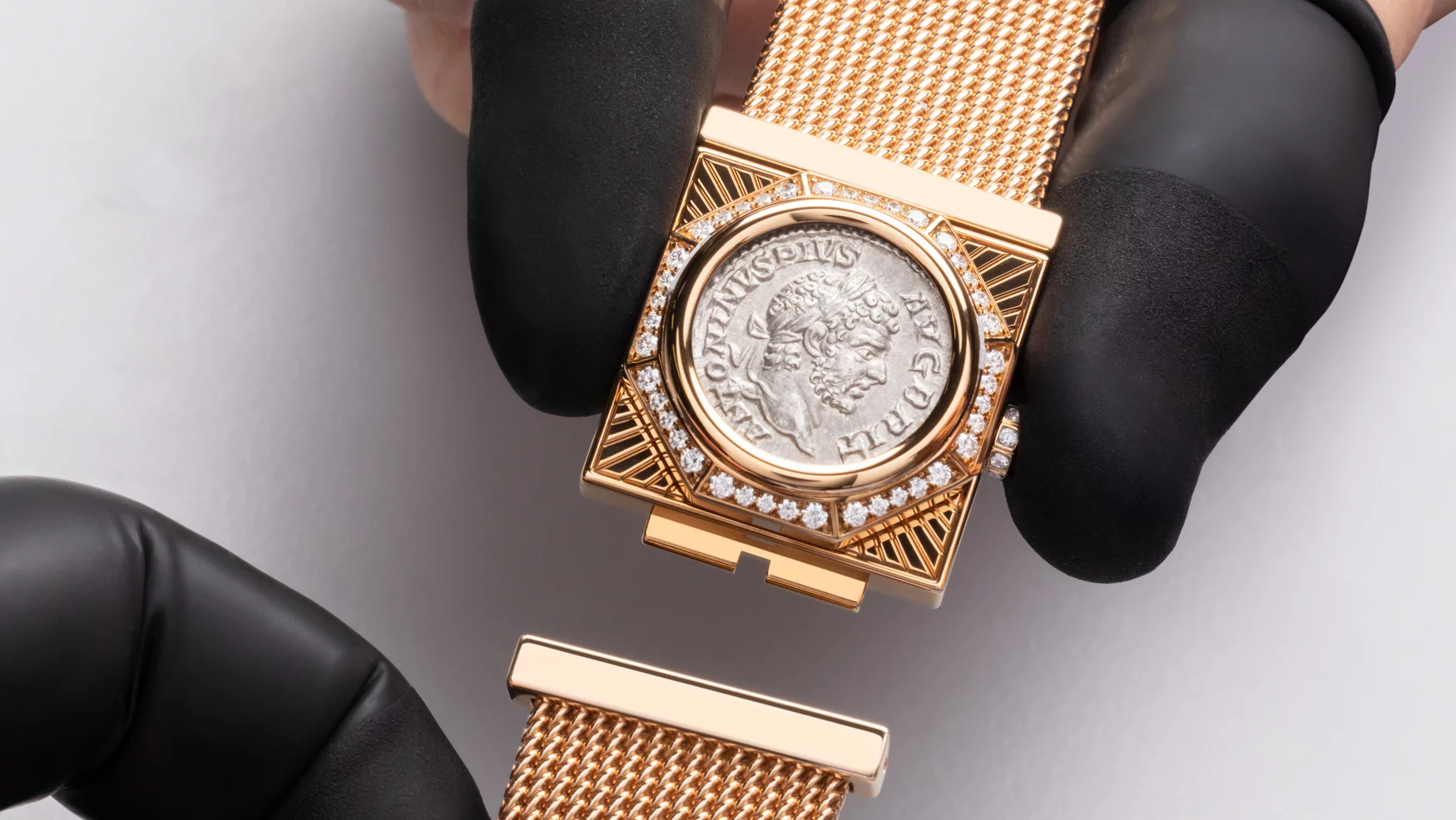
Bulgari’s “Art of Gold” at LVMH Watch Week 2026 brings the Monete and Tubogas back to centre stage
Jason LeeBulgari is one of those brands where the “Roman” in the story isn’t just a mood-board adjective. The brand traces its foundations to 1884, when Sotirios Voulgaris, a Greek silversmith, opened his first boutique on Via Sistina in Rome, before the Via dei Condotti flagship helped cement the house’s place in the city’s luxury geography. Even the name on the dial leans into that heritage: Bulgari’s own history notes that the BVLGARI wordmark, with its classical “V”, is explicitly inspired by ancient Roman inscriptions.
What makes that Roman identity a useful context for watches is that Bulgari has long treated jewellery ideas as engineering problems, not just styling exercises. Its official history frames the Serpenti — introduced in 1948 — as bracelet-watches that combined a spiral band made with the Tubogas technique and a geometric dial, a neat shorthand for how the Maison blends craft, form, and mechanics. On the design side, Bulgari’s own brand history summarises its visual language as bold colour, balanced volumes, and recognisable motifs rooted in Rome — codes that translate cleanly from high jewellery into wristwear, whether the reference point is industrial coil-work or ancient iconography.
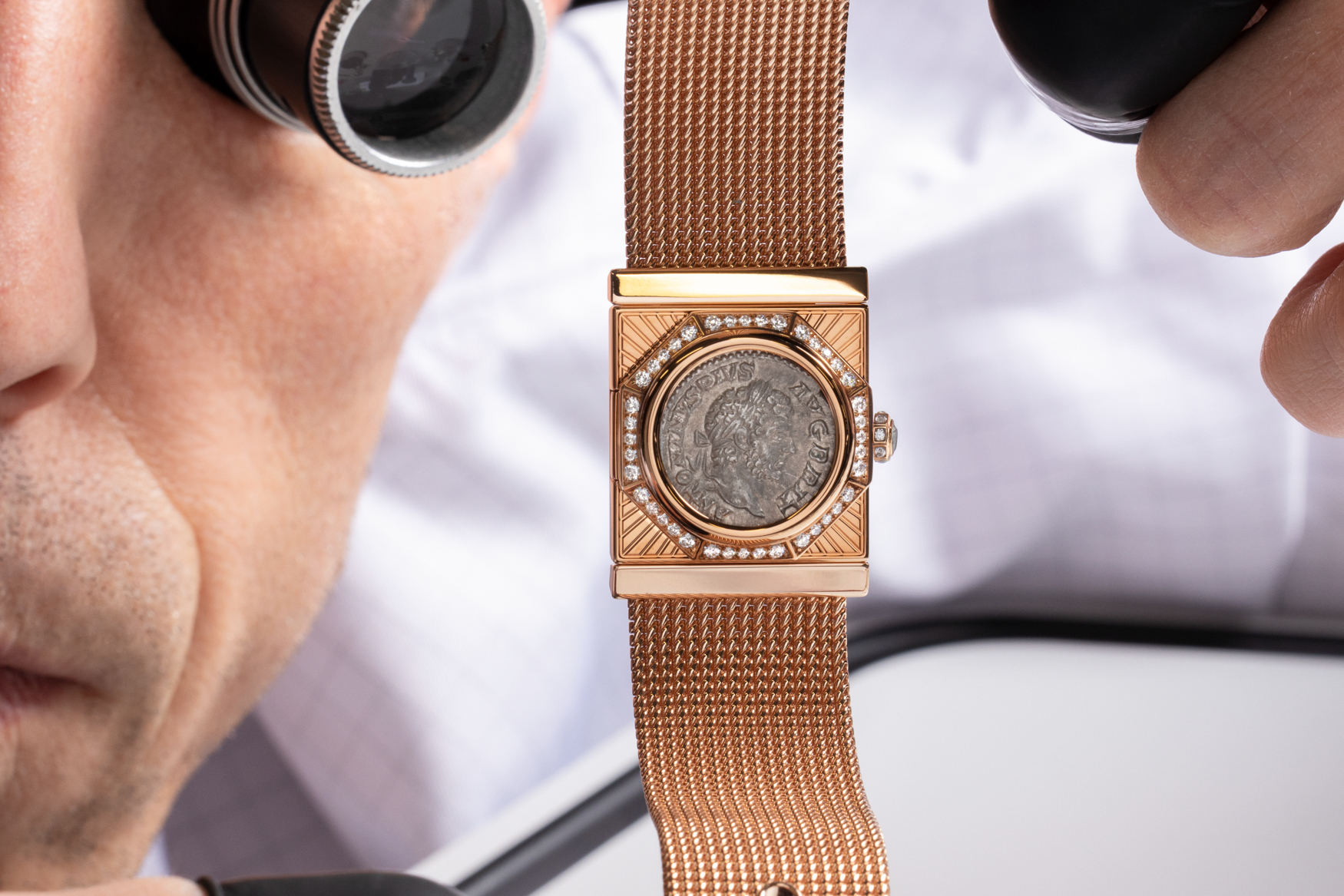
That jeweller-watchmaker positioning is exactly what Bulgari leans into for LVMH Watch Week 2026, presenting its new releases under the banner “Art of Gold”. The Maison is revisiting two signatures — Monete and Tubogas — via a rose-gold Maglia Milanese Monete secret watch (pairing the coin concept with Milanese mesh) and a yellow-gold, gemstone-set Tubogas Manchette cuff that nods to 1970s geometry. Underneath the precious-metal theatre, Bulgari is also clear about the watchmaking intent: the Monete is driven by the Piccolissimo BVP100 in a new crown-wound configuration, while the Tubogas Manchette uses the Lady Solotempo BVS100 with updated decoration.
Maglia Milanese Monete Secret Watch
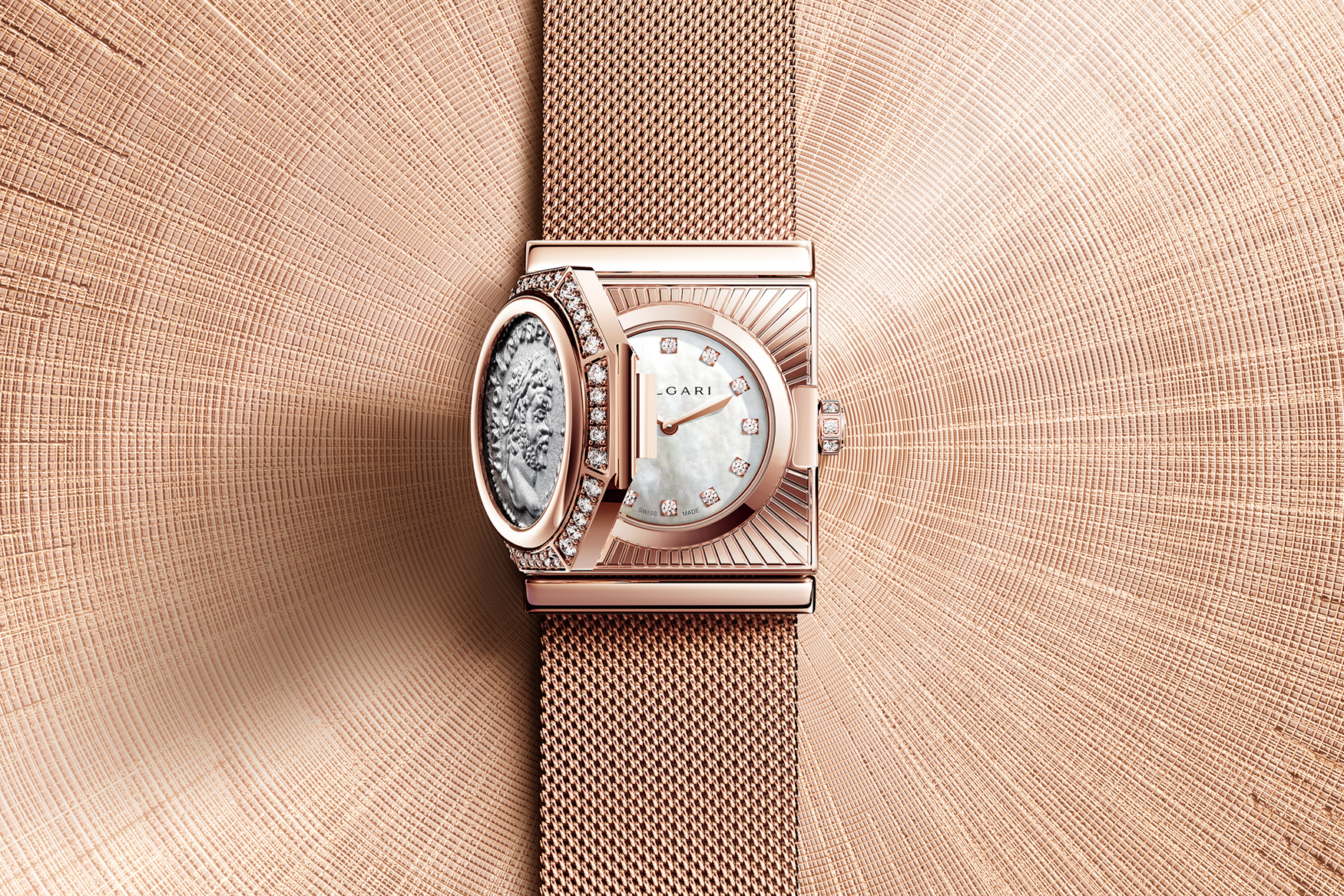
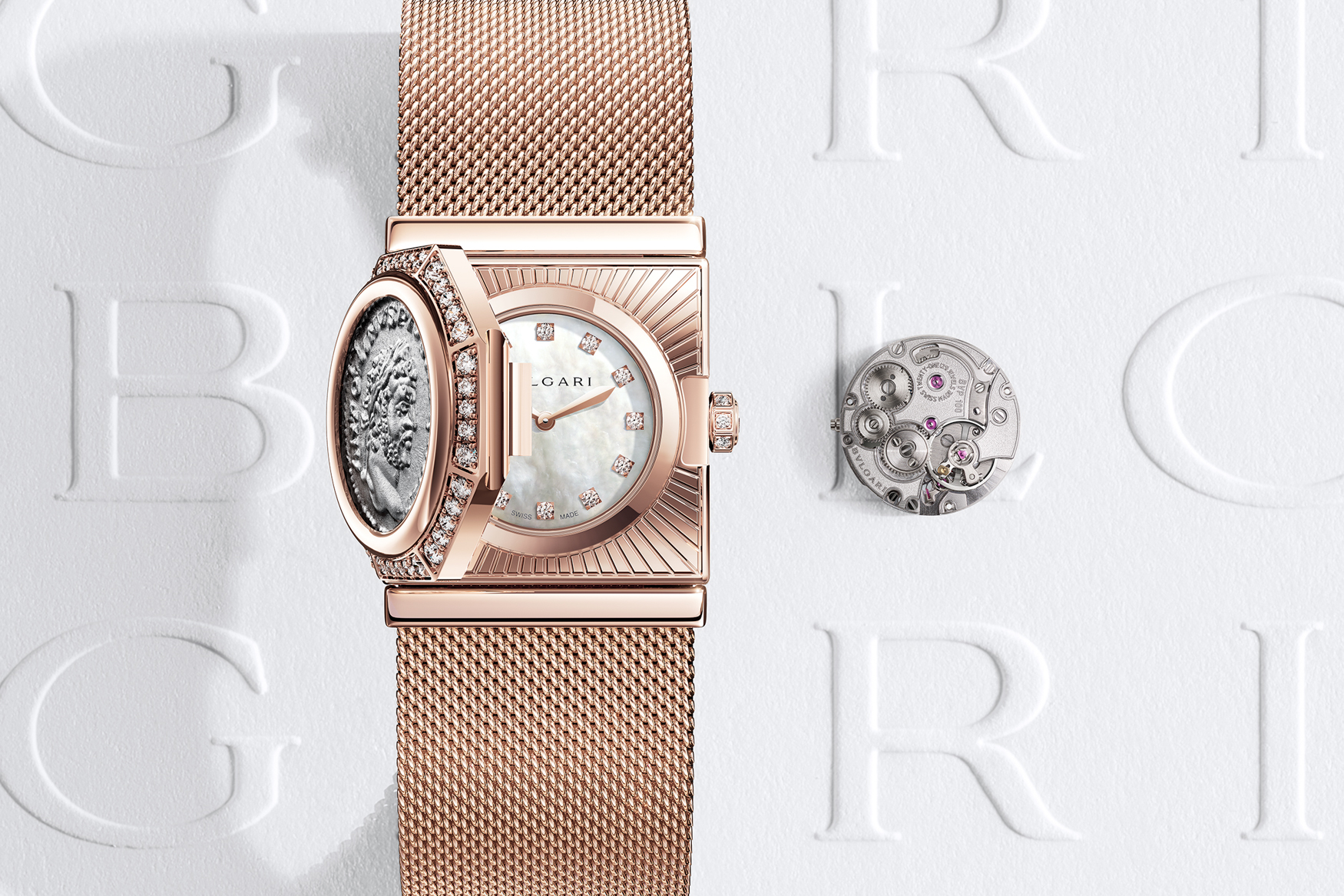
Monete is one of those ideas that feels uniquely Bulgari: take something that already carries meaning — a coin, a fragment, a piece of history — and treat it not as an inspiration, but as the centrepiece. For 2026, the Maglia Milanese Monete secret watch revisits the Monete concept that Bulgari introduced in the mid-1960s, and it does so by leaning harder than ever into tactility. The “secret watch” format is the key. Rather than making the dial the star, Bulgari uses an authentic ancient coin as the face you meet first, with the time display hidden beneath. It is based on a coin dated 198–297 AD depicting Emperor Caracalla.
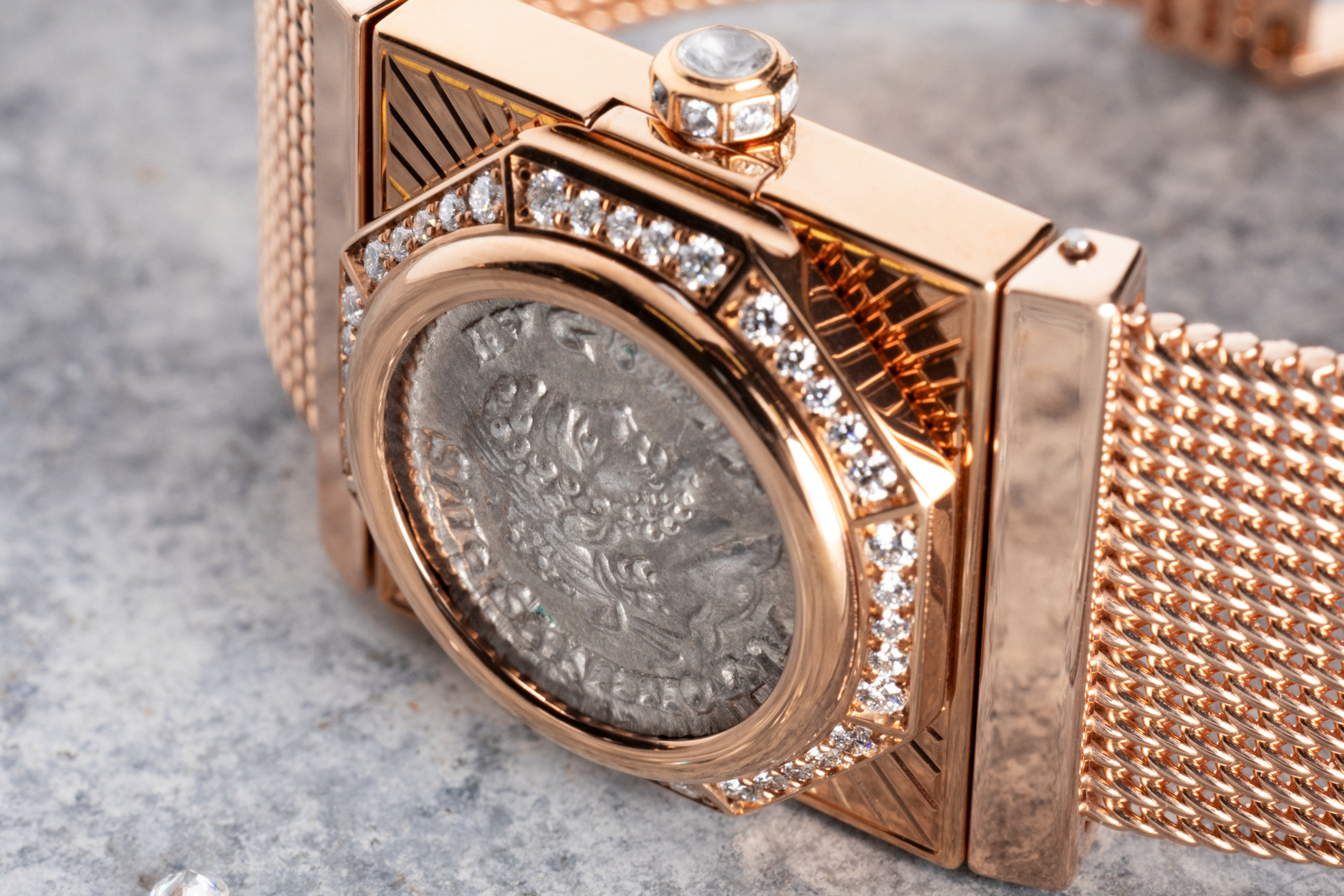
The other half of the story is the bracelet — and it’s arguably the more surprising development. For the first time, Bulgari applies traditional Milanese mesh to a Monete watch, describing it as being expressed with “masterful suppleness”. Milanese mesh is easy to take for granted as a generic term for any fine-woven bracelet, but Bulgari positions it as a specific heritage technique: interlaced gold threads, developed by Milanese goldsmiths during the Renaissance, and presented in Milan — “the cradle” of the technique — as a deliberate shift in geography for a Maison so rooted in Rome. Design-wise, it’s an intentionally eclectic collision: the coin, a geometric octagon, and the texture of the mesh. It also plays nicely with Bulgari’s broader preference for bold, legible shapes.
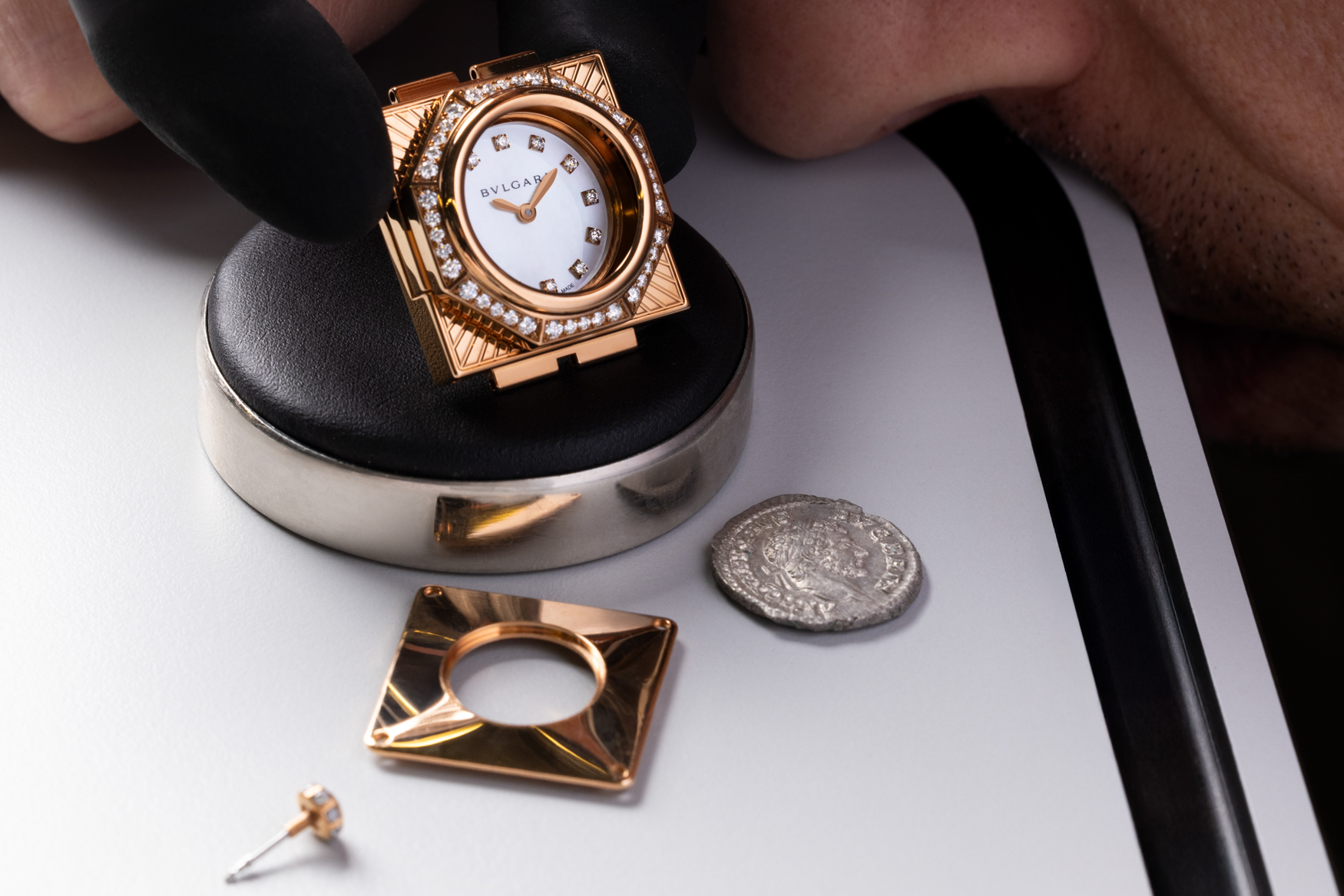
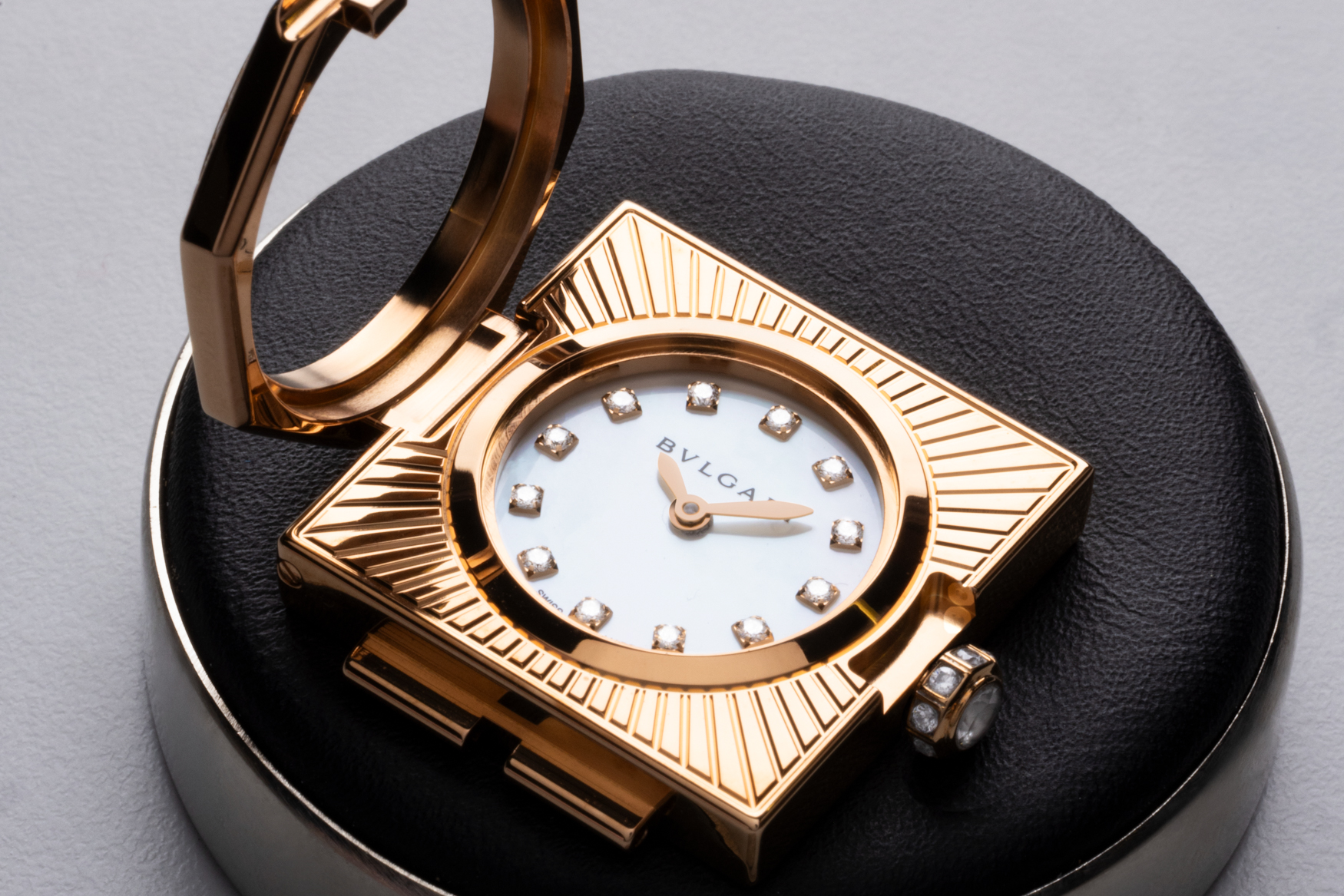
Flip the coin open, and the dial goes deliberately soft: a white mother-of-pearl base, diamond hour markers, and minimal hands. It reads less like a “watch dial” and more like a finishing detail inside a jewel — which is, of course, the point. Bulgari equips this Monete tribute with a pin buckle, described as a first for the collection.
If the outside is about goldsmithing, the inside is Bulgari’s ongoing argument that small, jewellery-led watches don’t need to abandon mechanical credibility. The Maglia Milanese Monete is powered by the Piccolissimo BVP100, introduced in 2022 and described by Bulgari as the world’s smallest round calibre. It beats at 21,600vph and offers 30 hours of power reserve.
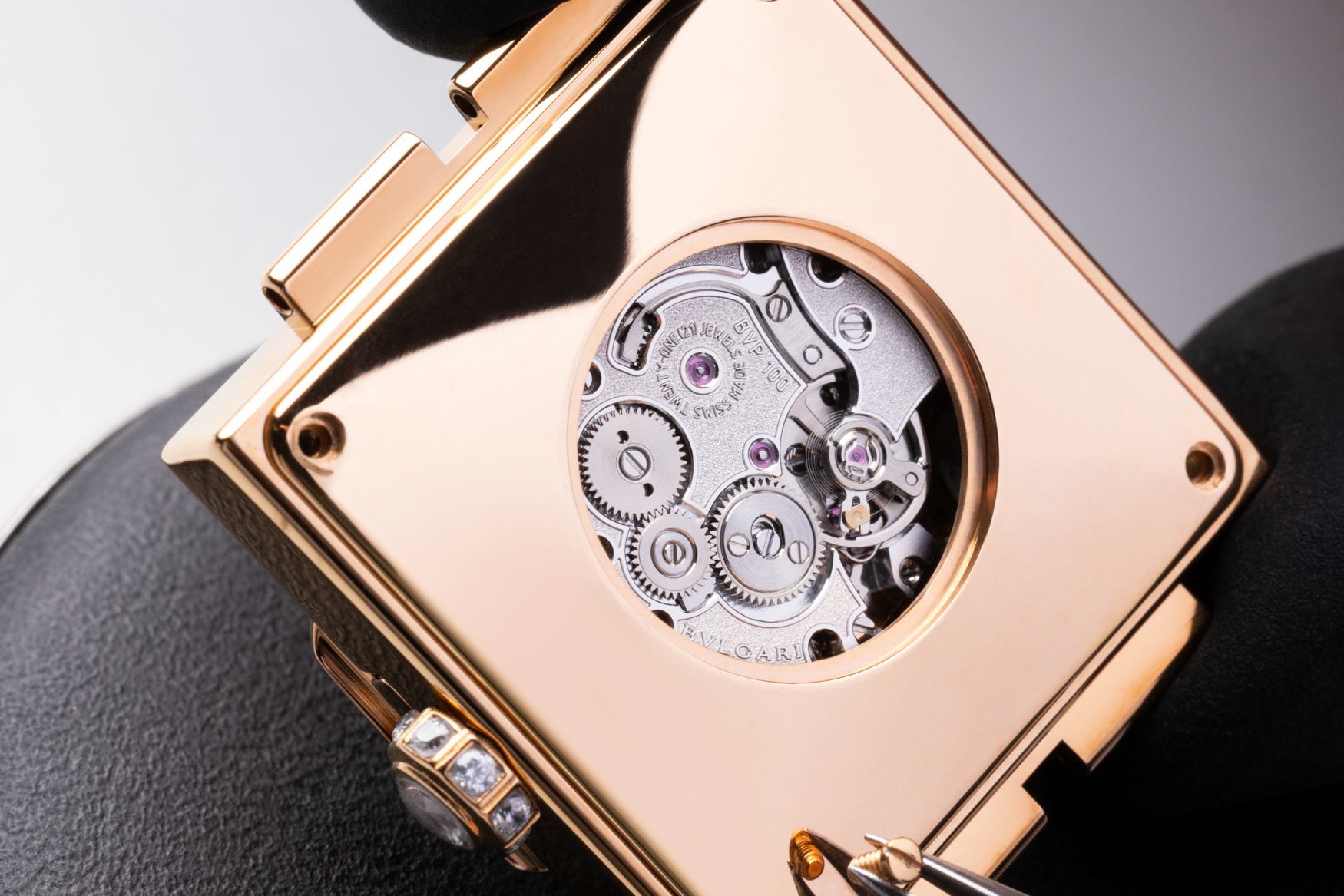
The headline update is usability and visibility. Bulgari says this is a new version of the BVP100 with crown winding, plus a sapphire caseback to reveal its inner workings. In practice, that’s a meaningful shift for a piece that could easily have stayed “secret” all the way through. There’s an implied confidence here: the watch isn’t only hiding time under a coin, it’s willing to show you how it does the job. Price: A$254,000
Tubogas Manchette
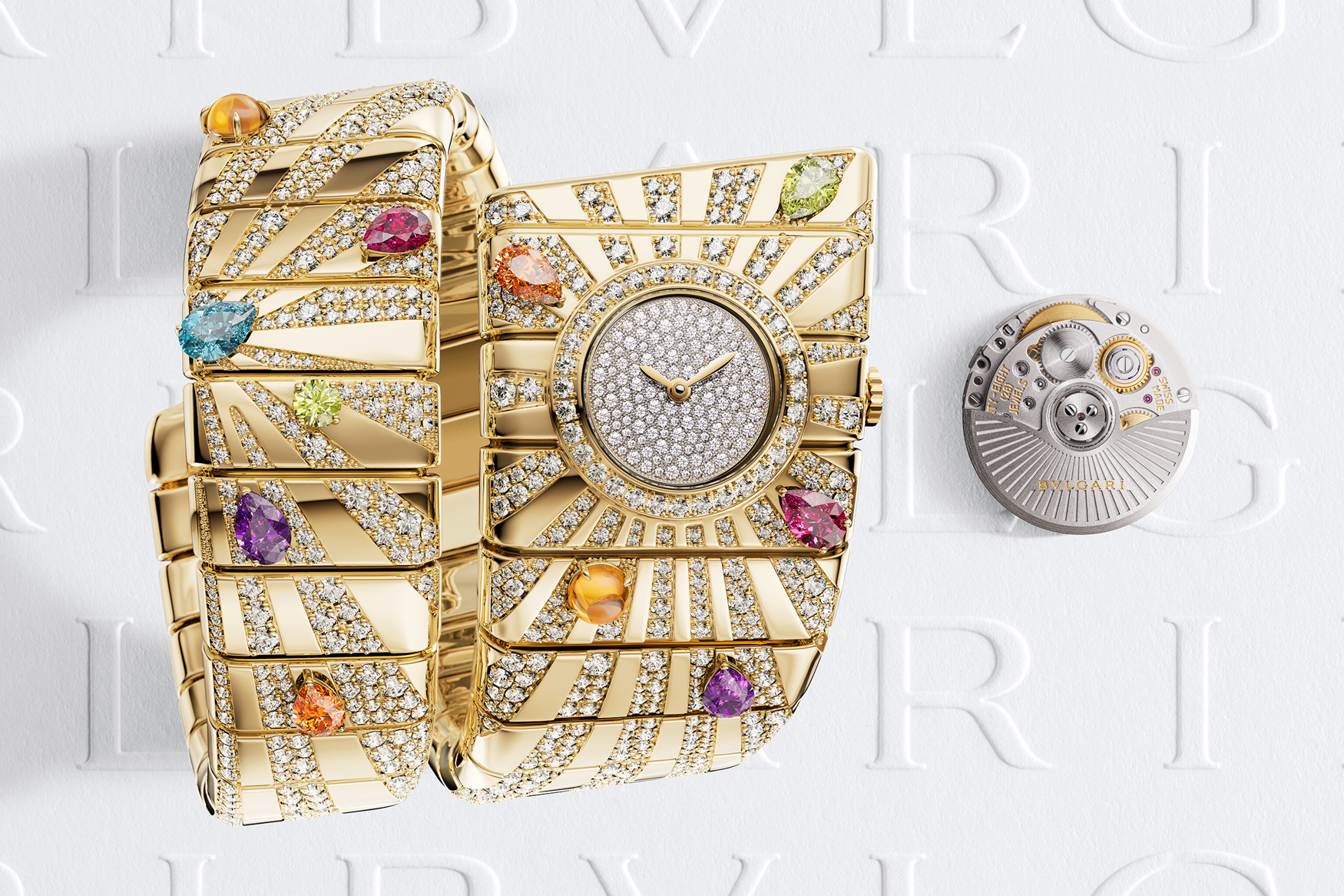
If Monete is Bulgari’s direct line to ancient Rome, Tubogas is its way of turning industry into glamour. In the release, Bulgari places Tubogas in its own timeline clearly: it first appeared at the Maison in the early 1940s, initially in serpentine form, before the 1970s cemented it as a signature creation. The Tubogas Manchette then makes its intention plain — it revisits an archival model from 1974, keeping the “wide single-coil” bracelet.

The Manchette format is important: this is jewellery that happens to tell time, not a watch that has been styled like jewellery. The case is compact — just 16mm — which lets the cuff do the talking. The dial itself is minimal: pavé diamonds, two hands, and very little else. It’s a watch designed to be read at arm’s length in the context of a full look, not scrutinised for typography or track precision. Where Bulgari pushes the 2026 version forward is in colour and surface rhythm. The release describes a “joie de vivre” palette — citrines, rubellites, peridots, amethysts, topazes, and spessartites — set against nearly 12 carats of diamonds across the coils.

The most interesting technical detail sits in the bracelet itself. According to Bulgari, the Tubogas Manchette introduces a new technique: each ring is moulded and polished, then meticulously assembled onto a titanium blade. That “blade” detail matters because it implies a structural backbone designed to keep the cuff’s architecture coherent while still preserving the softness that makes Tubogas feel alive on the wrist.
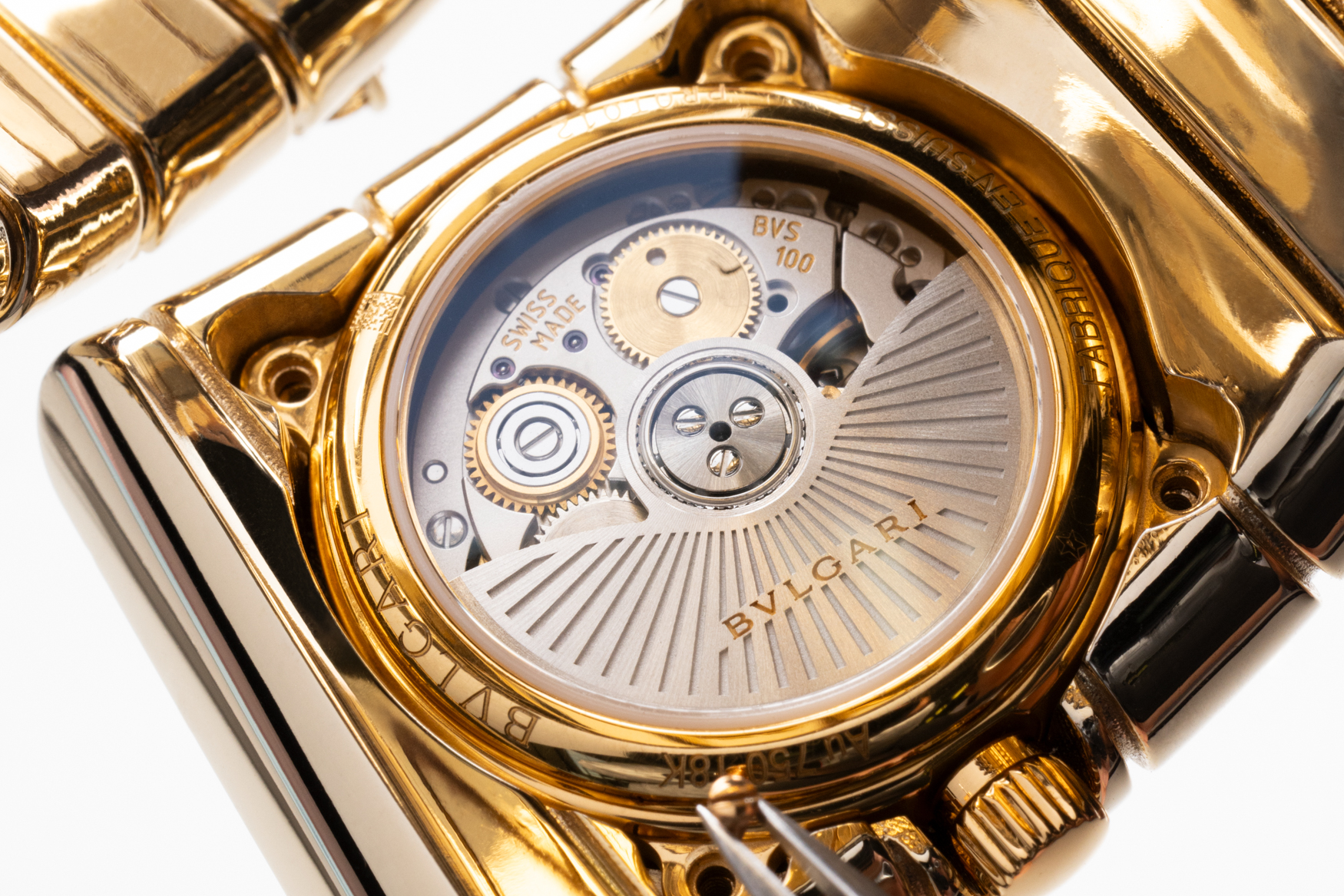
Inside the cuff is the Lady Solotempo Automatic BVS100, a manufacture calibre that Bulgari says it presented last year alongside the Serpenti Seduttori and Serpenti Tubogas. It runs at 21,600vph and offers a 50-hour power reserve. In this Tubogas Manchette configuration, Bulgari lists hours and minutes as the functions, and notes an oscillating mass decorated with the Bulgari logo and a sunray motif — a finishing touch that ties back to the watch’s broader radiating geometry. There’s also a transparent caseback, which is almost a statement in this context: Bulgari wants the wearer to think of this as a serious mechanical object, not just a bracelet with hands. Price: A$313,000
Closing thoughts
These two LVMH Watch Week 2026 releases read like two chapters of the same argument. On one side, the Maglia Milanese Monete uses an ancient coin and Milanese mesh to show how Bulgari can make history feel tactile and contemporary — then backs it up with a micro-movement that is now more straightforward to live with thanks to crown winding and a display back. On the other hand, the Tubogas Manchette brings a 1974 cuff back with a deliberately joyful colour palette, but also a new bracelet construction and an automatic calibre designed for compact, jewellery-led cases.
Bulgari’s “Art of Gold” framing is doing what it should: pulling the conversation away from a simple “new models” list and toward something more coherent — texture, construction, and the idea that Italian goldsmithing and Swiss mechanics don’t need to compete for space. These watches don’t try to pretend they’re everyday tool watches. Instead, they make a more specific case for what Bulgari does best: turning recognisable design codes into objects that are wearable, engineered, and unmistakably its own.